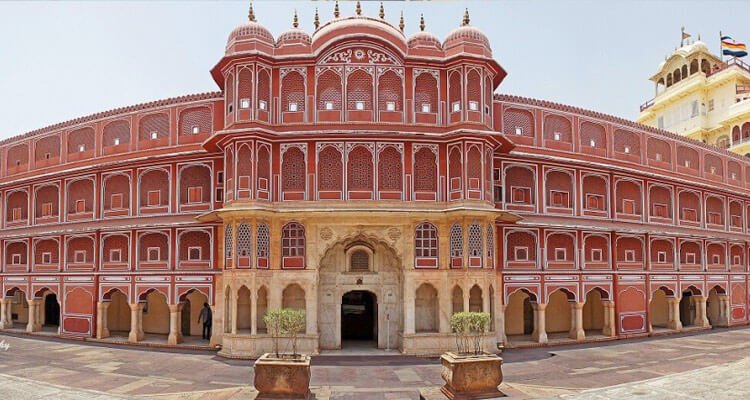
City Palace Jaipur: A Majestic Blend of Royal History & Architecture
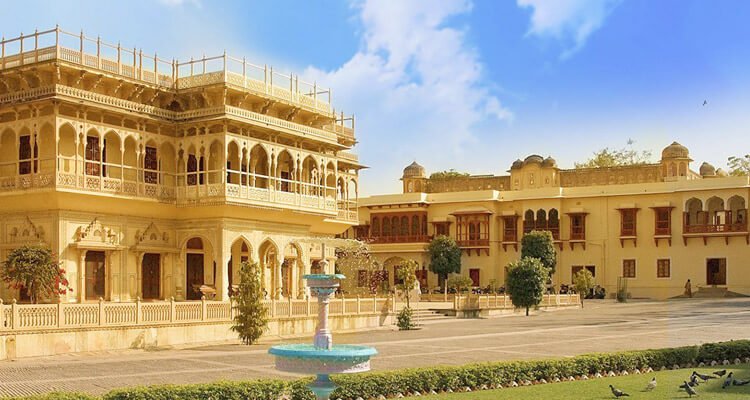
Located in the heart of the “Pink City,” the City Palace of Jaipur is more than just a monument—it is a living testament to the grandeur of the Kachwaha Rajput clan. Built with a stunning fusion of Rajput, Mughal, and European architecture, this sprawling complex offers a glimpse into the regal lifestyle of Jaipur’s Maharajas.
Whether you are a history buff, an architecture enthusiast, or a photographer, City Palace is a must-visit destination that transports you back to an era of opulence and valor.
🏛️ Visitor Information: Timings & Contact
Address: Jaleb Chowk, Near Jantar Mantar, Tripolia Bazar, Kanwar Nagar, Jaipur, Rajasthan 302002
Phone: 0141-4088888
Rating: ⭐ 4/5 Stars (Based on 27 reviews)
Day Visit Timings: 9:30 AM – 6:30 PM (Daily)
Night Visit Timings: 7:00 PM – 7:30 PM (Daily)
🎟️ City Palace Jaipur Entry Fees (2026)
For Indian Nationals
| Category | Museum Only | Composite Ticket | Museum at Night |
| Adult | ₹300 | ₹400 | ₹500 |
| Child (7-12) / Student | ₹150 | ₹250 | ₹250 |
| Senior/Defense/Police | ₹150 | ₹250 | ₹200 |
For Foreign Nationals
| Category | Museum Only | Composite Ticket | Museum at Night |
| Adult | ₹1000 | ₹1250 | ₹600 |
| Child (7-12) / Student | ₹500 | ₹650 | ₹300 |
📜 The Legacy & History
The City Palace was established by Maharaja Sawai Jai Singh II, the visionary founder of Jaipur, in the early 18th century. As he shifted his capital from Amer to the newly planned city of Jaipur, the palace became the seat of power.
The structure was refined over centuries by successive rulers, with significant contributions from Maharaja Madho Singh II and Raja Man Singh II. The design was spearheaded by architects Vidyadhar Bhattacharya and Samuel Swinton Jacob, resulting in the unique Indo-European aesthetic seen today.
✨ Key Highlights Inside the Palace
1. Pritam Niwas Chowk (The Four Gates)
The inner courtyard is famous for four small, intricately decorated gates representing the seasons and Hindu deities:
Peacock Gate (Autumn): Dedicated to Lord Vishnu, featuring stunning 3D peacock carvings.
Lotus Gate (Summer): Dedicated to Lord Shiva and Goddess Parvati.
Leheriya Gate (Spring): A vibrant green gate dedicated to Lord Ganesha.
Rose Gate (Winter): Adorned with delicate floral patterns.
2. Chandra Mahal
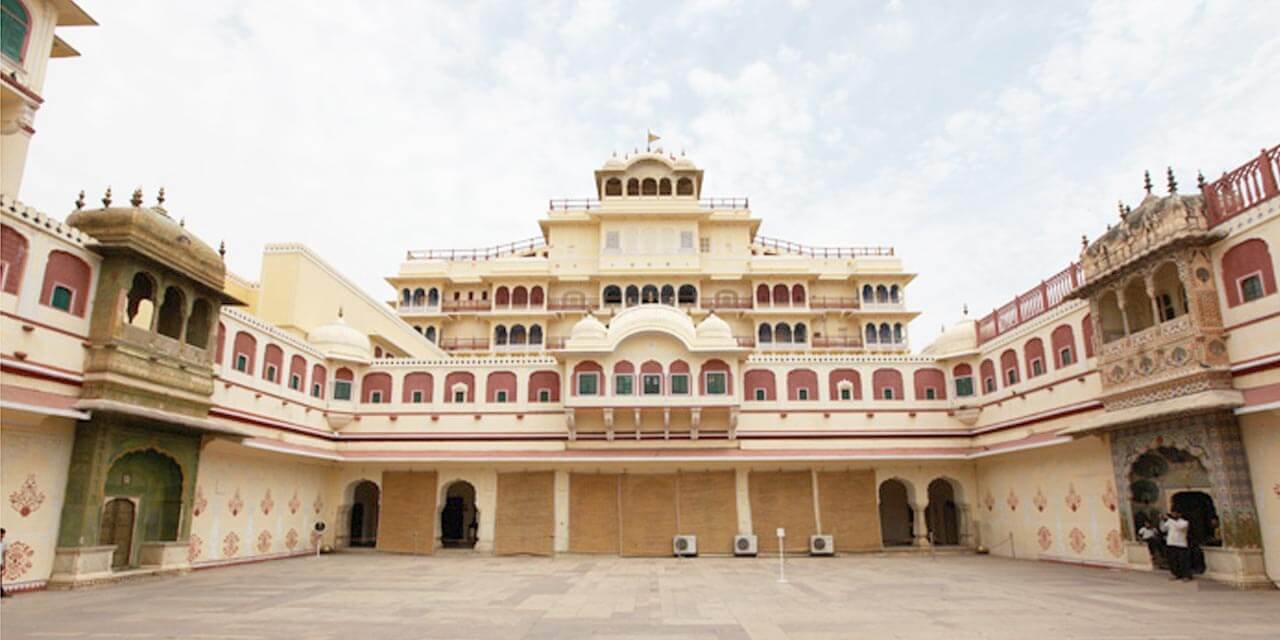
The most iconic part of the palace, this seven-story building remains the residence of the royal family. While the upper floors are private, the ground floor serves as a museum showcasing royal heirlooms, carpets, and manuscripts.
Note: This requires a separate or composite ticket.
3. Mubarak Mahal (The Textile Museum)
Originally built to welcome royal guests, this “Welcome Palace” now houses the Maharaja Sawai Mansingh II Museum. You can view an exquisite collection of Pashmina shawls, royal robes, and the famously oversized clothing of Maharaja Sawai Madho Singh I.
4. Diwan-e-Aam & The Giant Silver Urns
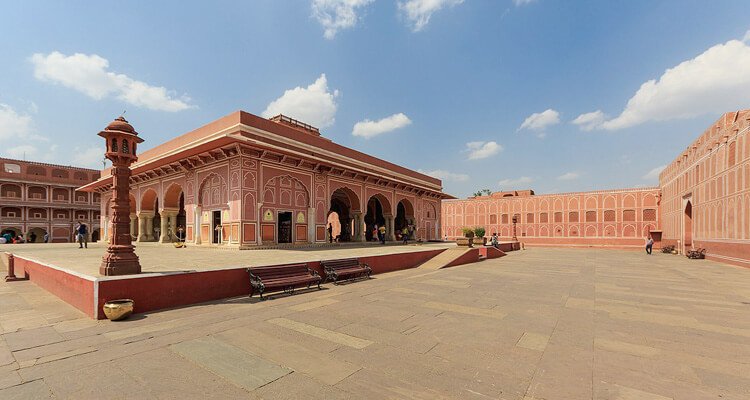
The “Hall of Public Audience” features magnificent marble flooring and crystal chandeliers. It houses two massive silver vessels (Gangajalis) which hold the Guinness World Record as the largest silver objects in the world. Maharaja Madho Singh II used them to carry Ganges water to England in 1902.
5. The Armory (Sileh Khana)
A paradise for history enthusiasts, the armory contains one of the finest collections of weapons in India, including daggers with ivory handles, diamond-encrusted swords, and 15th-century rifles.
👟 Traveler Tips for a Seamless Visit
Wear Comfortable Shoes: The palace grounds are vast and require a significant amount of walking.
Photography: While allowed in most courtyards, photography is strictly prohibited inside the Diwan-e-Khaas and certain museum galleries.
Hire a Guide: To truly understand the hidden symbolism of the architecture, consider an authorized guide or an audio guide.
Best Time to Visit: The winter months (October to March) offer the most pleasant weather for exploring the open-air courtyards.
Duration: Allocate at least 2 to 3 hours to see the main sections comfortably.
🚗 How to Reach
From Jaipur Airport: ~12 km (approx. 30-40 mins by cab).
From Jaipur Railway Station: ~4.5 km (approx. 15-20 mins by auto-rickshaw or taxi).
Local Transport: Located near the bustling Tripolia Bazar, the palace is easily accessible via e-rickshaws, cycle rickshaws, or private car rentals.

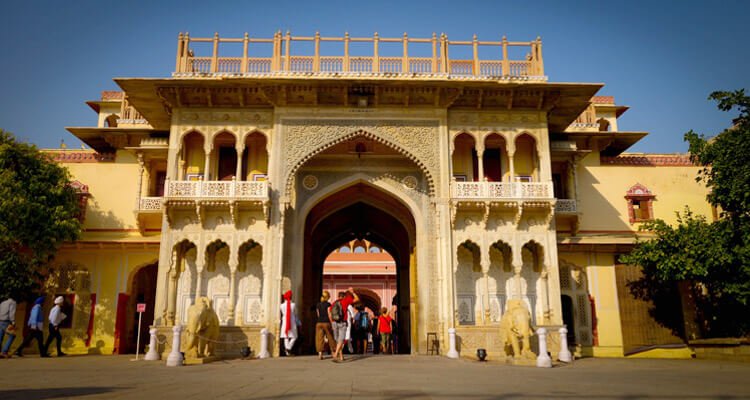
After your tour of the City Palace, you are perfectly positioned to explore Jaipur’s most iconic markets. Since the palace is located right in the heart of the walled city, most of these famous “Bazars” are within a 5–15 minute walk or a short e-rickshaw ride.
Here are the best shopping spots to visit, categorized by what they do best:
1. Tripolia Bazar (Right outside the Palace)
Famous For: Lac Bangles & Brassware Since you are already here, don’t miss Maniharon Ka Rasta, a small lane famous for artisans who craft traditional lac bangles right before your eyes. It is also the best place to buy heavy brass ornaments and vintage-style kitchenware.
2. Johari Bazar (5-minute walk)
Famous For: Jewelry & Gemstones The name “Johari” means jeweler. This is the oldest and most famous market for:
Kundan & Meenakari: Traditional enamel and gemstone jewelry.
Gemstones: Jaipur is a global hub for emeralds and semi-precious stones.
Bandhani Textiles: You will find high-quality tie-dye sarees and dupattas in the small lanes (Katlas) here.
3. Bapu Bazar (10-minute walk / 5-minute rickshaw)
Famous For: Leather Goods & All Things “Jaipuri” This is often considered the best “one-stop shop” for tourists. It is organized, colorful, and a bit easier to navigate than the others.
Mojaris: Traditional camel leather shoes with colorful embroidery.
Jaipuri Razai: World-famous, lightweight cotton quilts.
Textiles: Sanganeri and Bagru block-printed fabrics and ready-to-wear kurtas.
4. Nehru Bazar (Adjacent to Bapu Bazar)
Famous For: Jootis & Footwear If you are specifically looking for a massive variety of footwear, Nehru Bazar is the place. It is known for its vibrant atmosphere and dozens of shops dedicated solely to traditional Rajasthani jootis.
5. Chandpole Bazar (10-minute rickshaw)
Famous For: Marble Sculptures & Woodwork Located near the Chandpole Gate, this market is less focused on clothing and more on home decor.
Marble Art: You can find everything from small marble coasters to life-size religious statues.
Wooden Toys: Hand-carved and painted traditional toys and puppets.
🛍️ Quick Shopping Tips:
Bargaining: It is expected! Start by offering about 50-60% of the quoted price and meet somewhere in the middle.
Cash is King: While bigger showrooms accept cards, the best deals and the most authentic items are found in tiny stalls that often prefer cash or UPI (like Google Pay).
Check Quality: For lac bangles, ensure they aren’t brittle. For leather mojaris, check that the stitching is firm.

Visiting the City Palace is a different experience compared to other forts in Jaipur because it is still a royal residence. To ensure you aren’t caught off guard by the prices or the layout, here are the deeper details you need to know before you arrive.
1. The “Secret” Ticket Tiers
Many tourists don’t realize there are two very different ways to see the palace. The standard ticket only gets you into the courtyards and the museum.
| Ticket Type | What You See | Approx. Cost (Foreign / Indian) |
| Museum Only | Courtyards, Armory, Textile Museum, and Diwan-e-Aam. | ₹1000 / ₹300 |
| Royal Grandeur | Everything above PLUS the private rooms of the Chandra Mahal (Blue Room, Gold Room, etc.). | ₹3500 – ₹5000+ / Same for all |
Pro Tip: If you want those famous Instagram photos of the “Blue Room” (Chhavi Niwas) or the “Gold Room” (Shobha Niwas), you must buy the expensive Royal Grandeur ticket. These rooms are not accessible with a standard ticket.
2. The Four Seasons Gates (Pritam Niwas Chowk)
This is the most photographed spot. Each gate has a specific meaning:
Peacock Gate: Represents Autumn and Lord Vishnu. Look for the 3D peacock feathers.
Lotus Gate: Represents Summer and Lord Shiva/Parvati.
Leheriya (Green) Gate: Represents Spring and Lord Ganesha.
Rose Gate: Represents Winter and Goddess Devi.
Trivia: These gates were designed so that the Maharaja could enter the inner palace through a different gate depending on the season or the deity he wanted to honor that day.
3. The “Holy” Silver Urns (Gangajalis)
In the Diwan-e-Khaas, you will see two massive silver jars.
The World Record: They are the largest sterling silver vessels in the world ($1.6$ meters tall).
The Story: Maharaja Madho Singh II was a very devout Hindu. When he traveled to England in 1902 for King Edward VII’s coronation, he refused to drink the “English water.” He had these jars filled with 4,000 liters of holy Ganges water to take with him on the ship.
4. Photography Restrictions
Courtyards: Generally allowed and free.
Museums/Galleries: Strictly prohibited. You will be asked to put your phone/camera away in the Textile and Armory sections.
Professional Shoots: If you are wearing a wedding gown or carrying a tripod for a professional shoot, you will likely be charged a much higher “commercial” photography fee at the gate.
5. The Royal Family is “Home”
Look at the top of the Chandra Mahal (the tallest building).
One Flag: If only the state flag is flying, the Maharaja is away.
One and a Quarter Flag: If a smaller flag is flying above the main one, it means the Maharaja is currently inside the palace.
Why 1.25? The rulers of Jaipur were given the title “Sawai” (meaning one and a quarter) by the Mughal Emperor because they were considered 25% more intelligent/capable than anyone else.
6. Practical Visit Tips
Entry Points: Enter through Virendra Pol or Udai Pol. Avoid Tripolia Gate—that is reserved exclusively for the Royal Family.
Audio Guides: If you don’t want to hire a human guide, the audio guide is excellent and available in multiple languages.
Accessibility: Unlike the steep climb at Amer Fort, City Palace is mostly flat and very wheelchair/elderly friendly.
Avoid the “Gemstone” Scams: Some “guides” inside or just outside the palace might offer to take you to a “government-approved” jewelry shop. These are usually high-commission tourist traps. It’s better to stick to the markets I mentioned earlier (Bapu/Johari Bazar).
7. Night Visit: Is it worth it?
The Night Visit (7:00 PM – 7:30 PM entry) is magical because the palace is lit up with golden lights. It includes a short Light and Sound show. It is much quieter and cooler than the day, but you cannot see the details of the museum exhibits as clearly.
