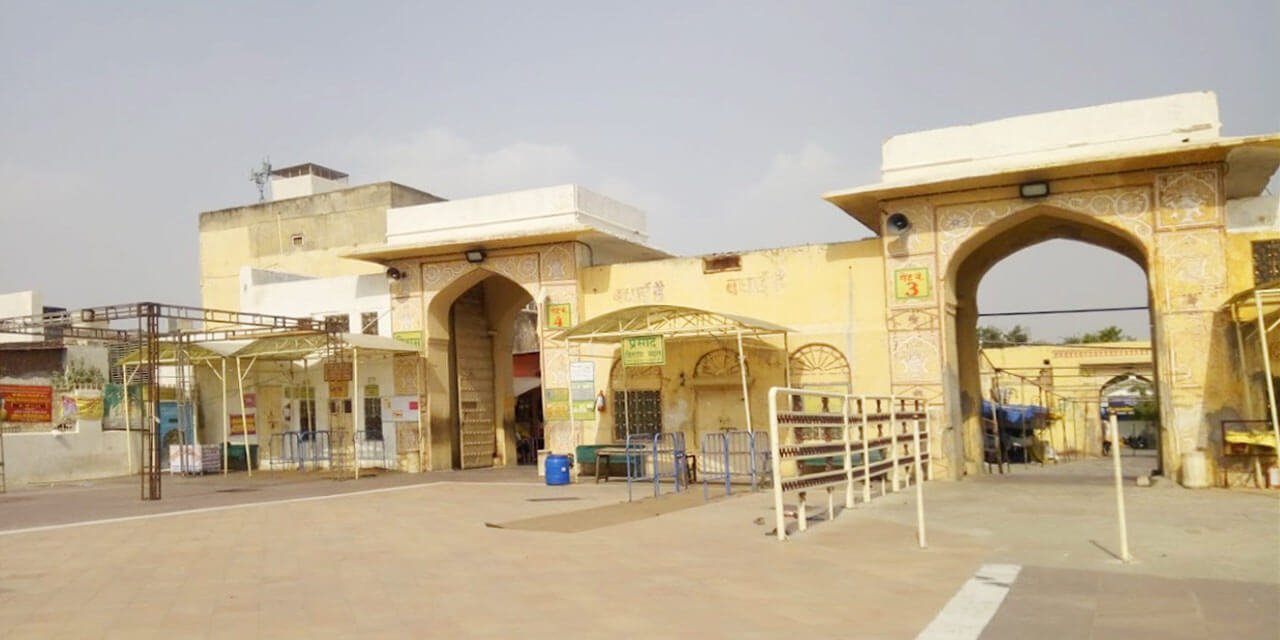
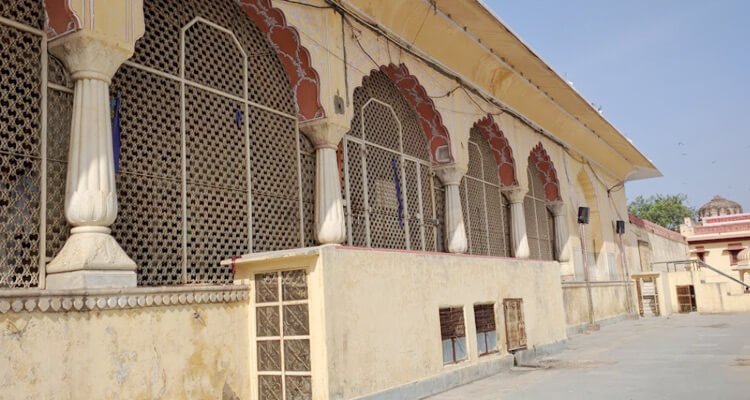
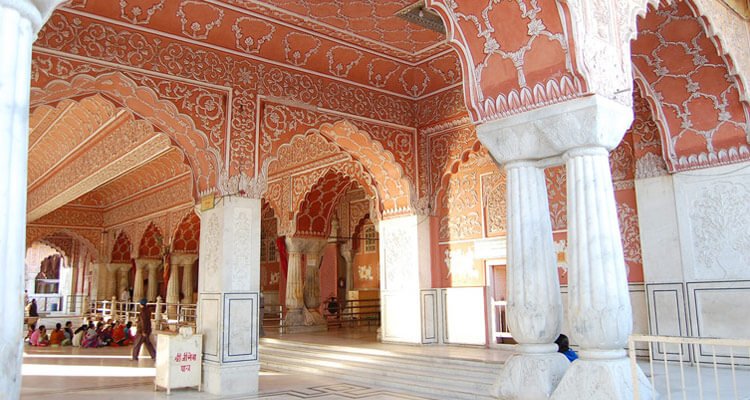
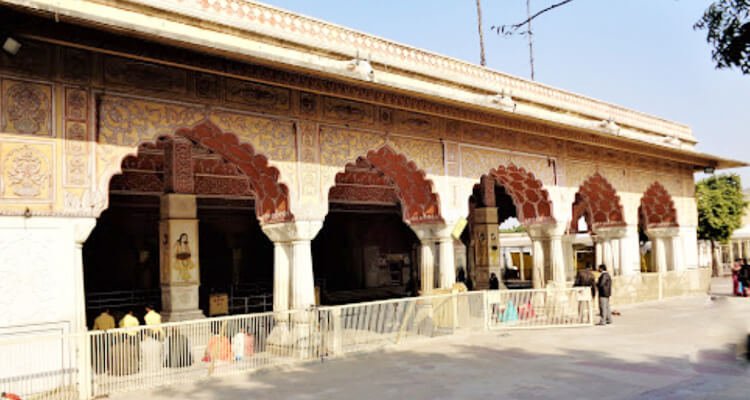
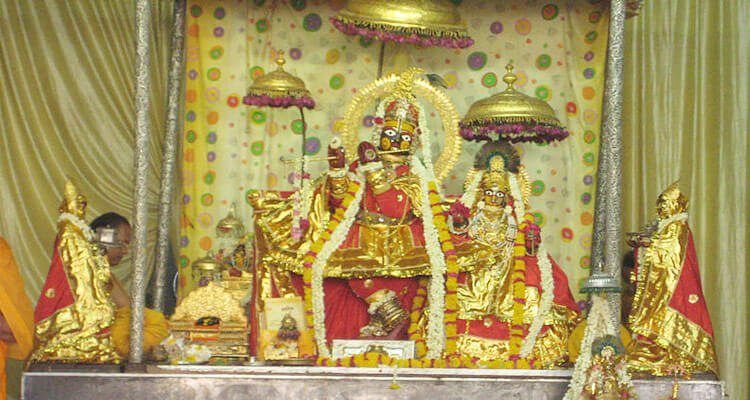
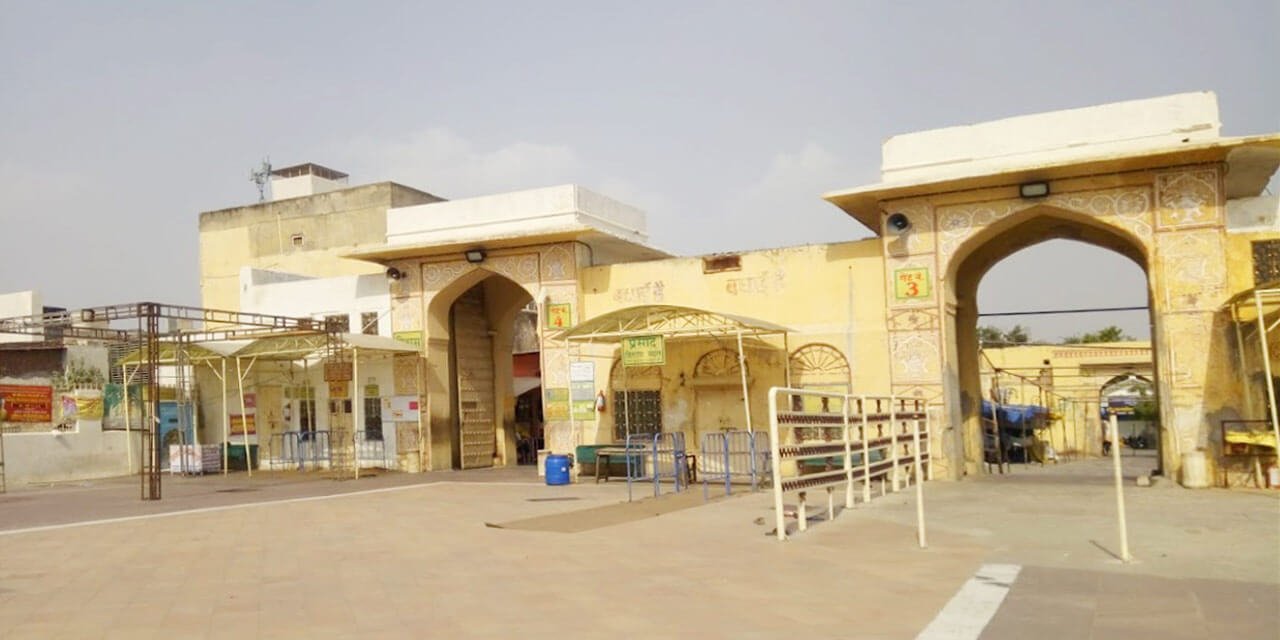
Located within the City Palace complex, the Govind Dev Ji Temple is the spiritual heart of Jaipur. Dedicated to Lord Krishna, the deity is considered the “True King” of Jaipur, while the royal family serves as his ministers (Dewans). It is one of the most sacred shrines for Vaishnavites and is world-renowned for its architectural feat and peaceful vibration.
🕒 Temple Timings & Aarti Schedule (2026)
The temple follows a strict schedule of seven Aartis (Jhaki) throughout the day. Devotees plan their visits around these specific windows.
| Aarti Name | Summer Timings (Approx) | Winter Timings (Approx) |
| Mangla | 4:30 AM – 5:00 AM | 5:00 AM – 5:30 AM |
| Dhoop | 7:30 AM – 8:45 AM | 8:00 AM – 9:00 AM |
| Shringar | 9:30 AM – 10:15 AM | 9:45 AM – 10:30 AM |
| Gwal | 11:00 AM – 11:30 AM | 11:15 AM – 11:45 AM |
| Rajbhog | 11:45 AM – 12:15 PM | 12:00 PM – 12:30 PM |
| Sandhya | 5:45 PM – 6:45 PM | 5:30 PM – 6:30 PM |
| Shayan | 8:15 PM – 8:45 PM | 8:00 PM – 8:30 PM |
Entry Fee: Free for all.
Phone: +91 0141 261 9413
Address: Jainiwas Gardens, Jalebi Chowk, Jaipur, Rajasthan 302002.
📜 The Legend of the Idol: “Bajrakrit”
The idol of Govind Dev Ji is believed to be the most accurate physical representation of Lord Krishna on Earth.
The Creator: Legend says the idol was carved 5,500 years ago by Bajranabh, the great-grandson of Lord Krishna.
The Approval: After two previous attempts (Madan Mohan Ji and Gopi Nath Ji), Bajranabh created this third idol. Upon seeing it, his grandmother confirmed it looked exactly like the Lord.
The Journey: The idol was brought from Vrindavan to Jaipur by Maharaja Sawai Jai Singh II to protect it from Mughal iconoclasm.
🏛️ Architectural Marvel & World Record
The temple is not just a spiritual hub but an engineering wonder.
Guinness World Record: The temple’s Satsang Hall holds the record for the world’s widest single-span reinforced concrete (RCC) flat roof.
The Span: At 118 feet wide without a single supporting pillar in the middle, it allows thousands of devotees to have an unobstructed view of the deity.
Royal Design: The palace of the King (Chandra Mahal) was built such that the Maharaja could see the temple directly from his windows to offer prayers every morning.
✨ Visitor Experience & Festivals
The Bhog: The Lord is offered food (Prasad) in pure silver utensils. The temple’s Laddoos are famous and can be purchased within the complex.
Janmashtami & Holi: These are the most vibrant times to visit. During Janmashtami, the footfall can exceed several hundred thousand people in a single day.
Jai Niwas Garden: The temple is surrounded by these beautiful Mughal-style gardens, perfect for a peaceful walk after the Darshan.
📍 Nearby Attractions
City Palace (500m): Explore the royal museums and courtyards.
Jantar Mantar (700m): The UNESCO-listed astronomical observatory.
Hawa Mahal (800m): The iconic “Palace of Winds.”


This itinerary is designed for the traveler who wants to experience the soul of Jaipur—blending the early morning spiritual energy of the Govind Dev Ji Temple with the vibrant, ancient craft of Lac Bangle making in the heart of the Old City.
🏛️ The “Soul of the Pink City” Morning Itinerary
Phase 1: Spiritual Awakening (07:30 AM – 09:30 AM)
07:30 AM | Govind Dev Ji Temple: Arrive for the Dhoop Aarti. The atmosphere is electric with live bhajans and thousands of devotees chanting. Witness the curtains open to reveal the deity in a new daily “Shringar” (adornment).
08:45 AM | Jai Niwas Gardens: After the aarti, take a peaceful 15-minute walk through these Mughal-style gardens located directly outside the temple. It’s the best way to transition from the crowd to the quiet of the morning.
09:15 AM | Breakfast at Jalebi Chowk: Grab a fresh plate of Jalebis and Poha from the local vendors right outside the City Palace gates.
Phase 2: The Art of Lac (10:00 AM – 11:30 AM)
10:00 AM | Tripolia Bazaar: Walk or take a 2-minute e-rickshaw to Tripolia Gate. This is where the city’s oldest markets begin to open.
10:15 AM | Maniharon Ka Rasta (Bangle Lane): This is the highlight. Turn into this narrow lane to see the Manihari artisans (traditional lacquer workers) heating and shaping Lac Bangles over small charcoal fires.
What to buy: Look for Leheriya (wave-like) patterns or Kundan-studded bangles.
Pro Tip: You can often ask them to resize a bangle on the spot using their wooden heating mandrels.
11:00 AM | Traditional Jewelry Hunt: Visit Surana Jewellers (if looking for high-end heritage pieces) or explore the silver shops in Johari Bazaar (5-minute walk). Look for Thewa or Meenakari work—Jaipur’s signature enamel art.
🛍️ Quick Shopping Guide: What & Where
| Item | Best Location | Why? |
| Lac Bangles | Maniharon Ka Rasta | Authentic, handmade, and customizable. |
| Kundan/Meenakari | Johari Bazaar | The global hub for gemstone-encrusted gold and silver. |
| Lac Jewelry (Sets) | Tripolia Bazaar | Features unique necklaces and earrings made of resin. |
| Traditional Prints | Bapu Bazaar | Best for Bandhani (tie-dye) and Sanganeri block prints. |
💡 Traveler’s Tips for 2026
Temple Etiquette: Dress modestly. Photography is strictly prohibited inside the main temple hall—keep your camera in your bag until you reach the gardens.
The “Sunday” Rule: Many shops in Tripolia Bazaar and Maniharon Ka Rasta are closed on Sundays. Try to plan this for a weekday or Saturday.
Bargaining: In the bazaars, it is common to bargain. Start at about 60-70% of the quoted price and settle somewhere in the middle.
Cash vs. UPI: While almost every shop now accepts UPI (PhonePe/GPay), small bangle artisans often prefer cash for small purchases under ₹200.
