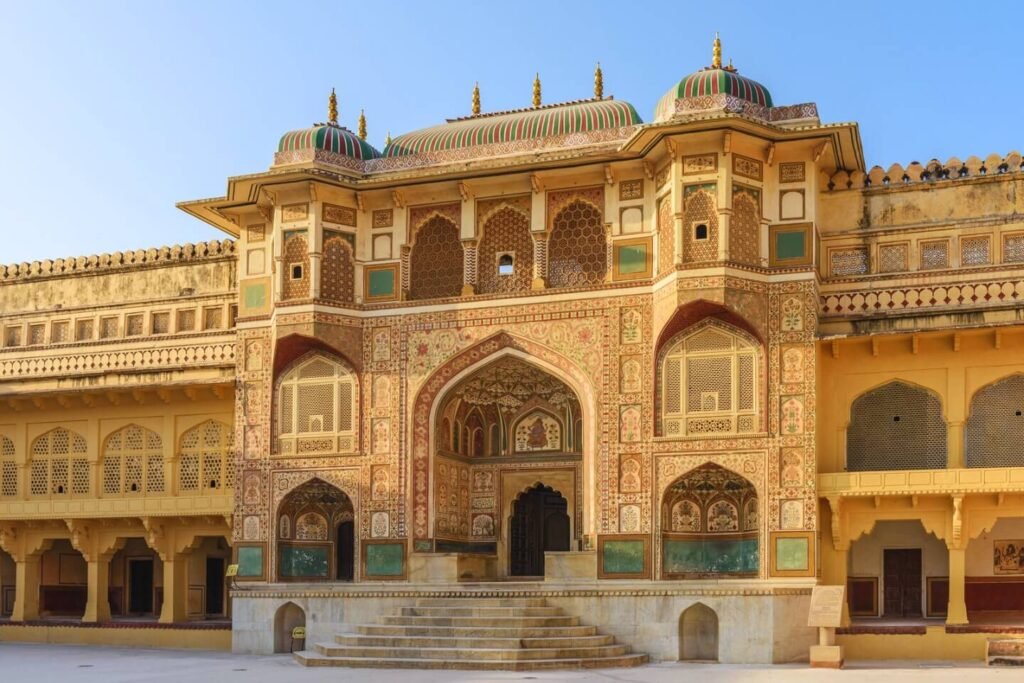
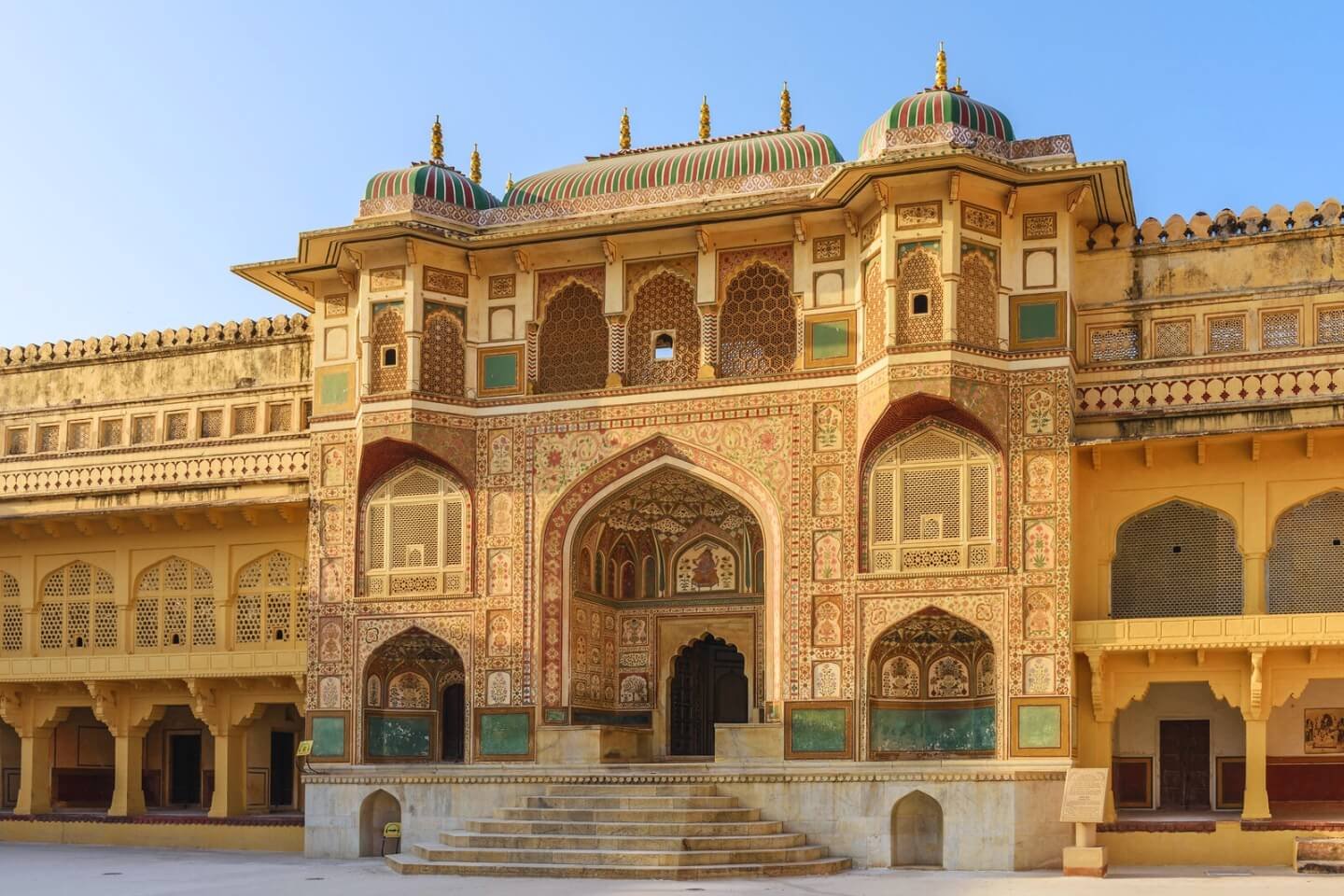
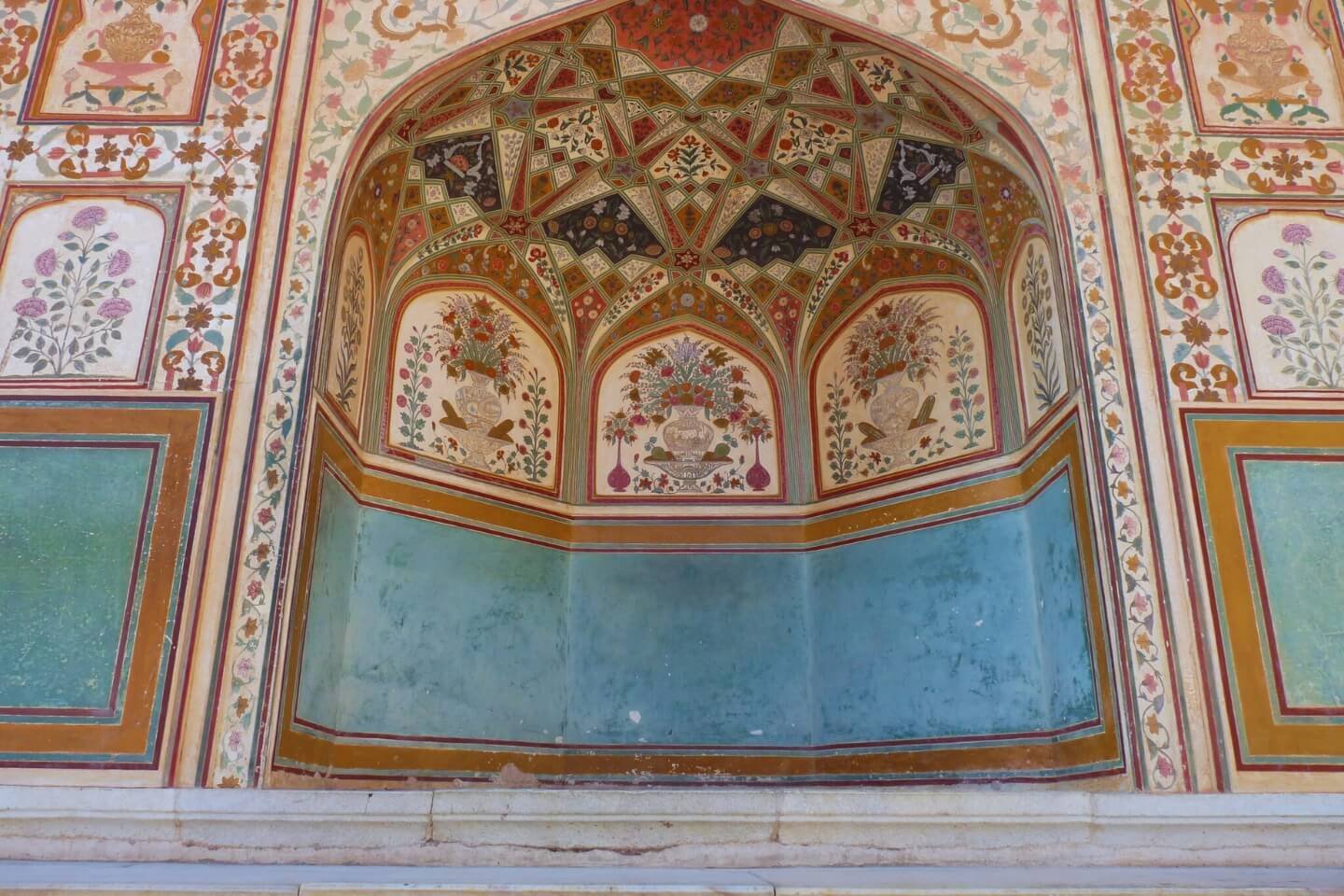
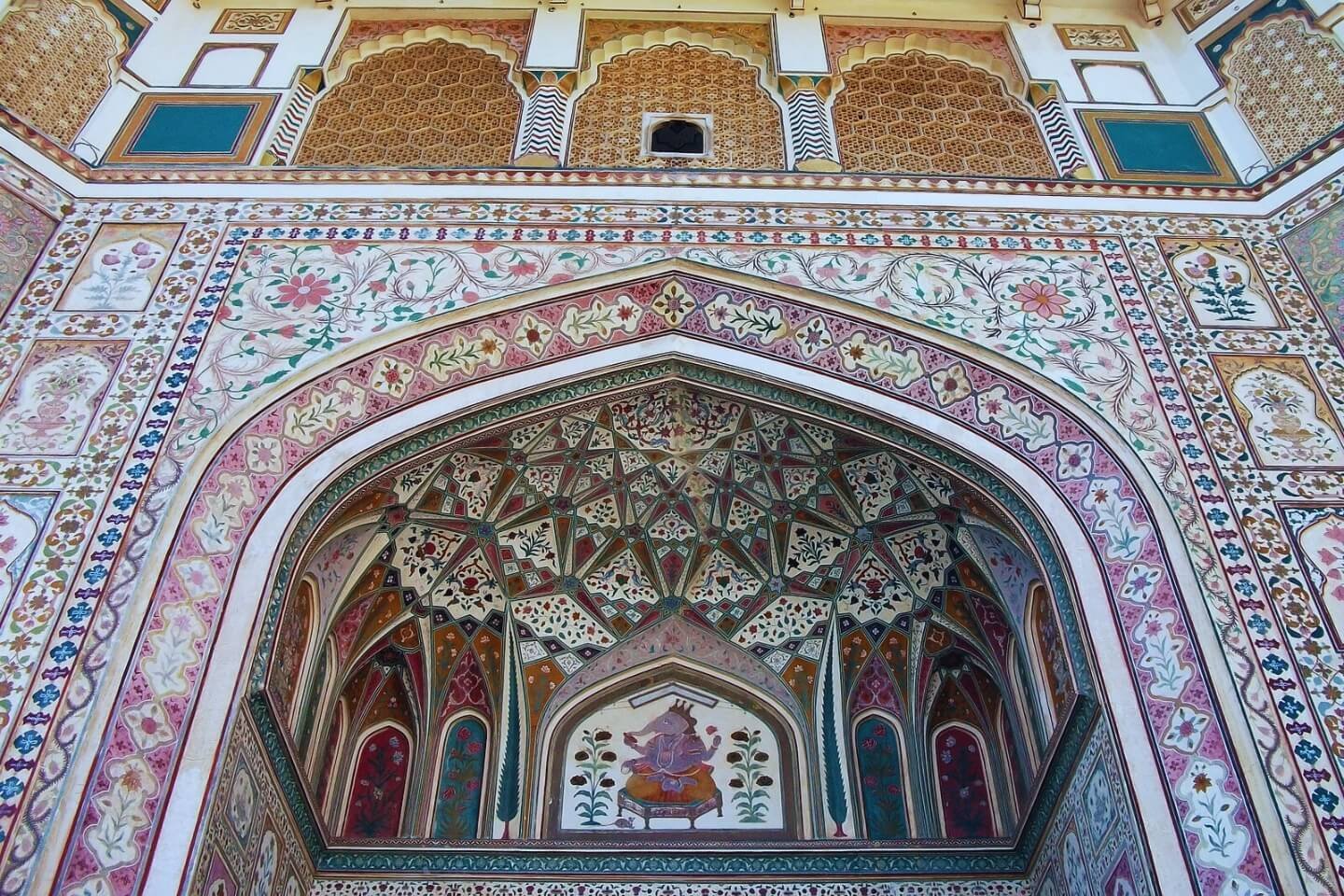
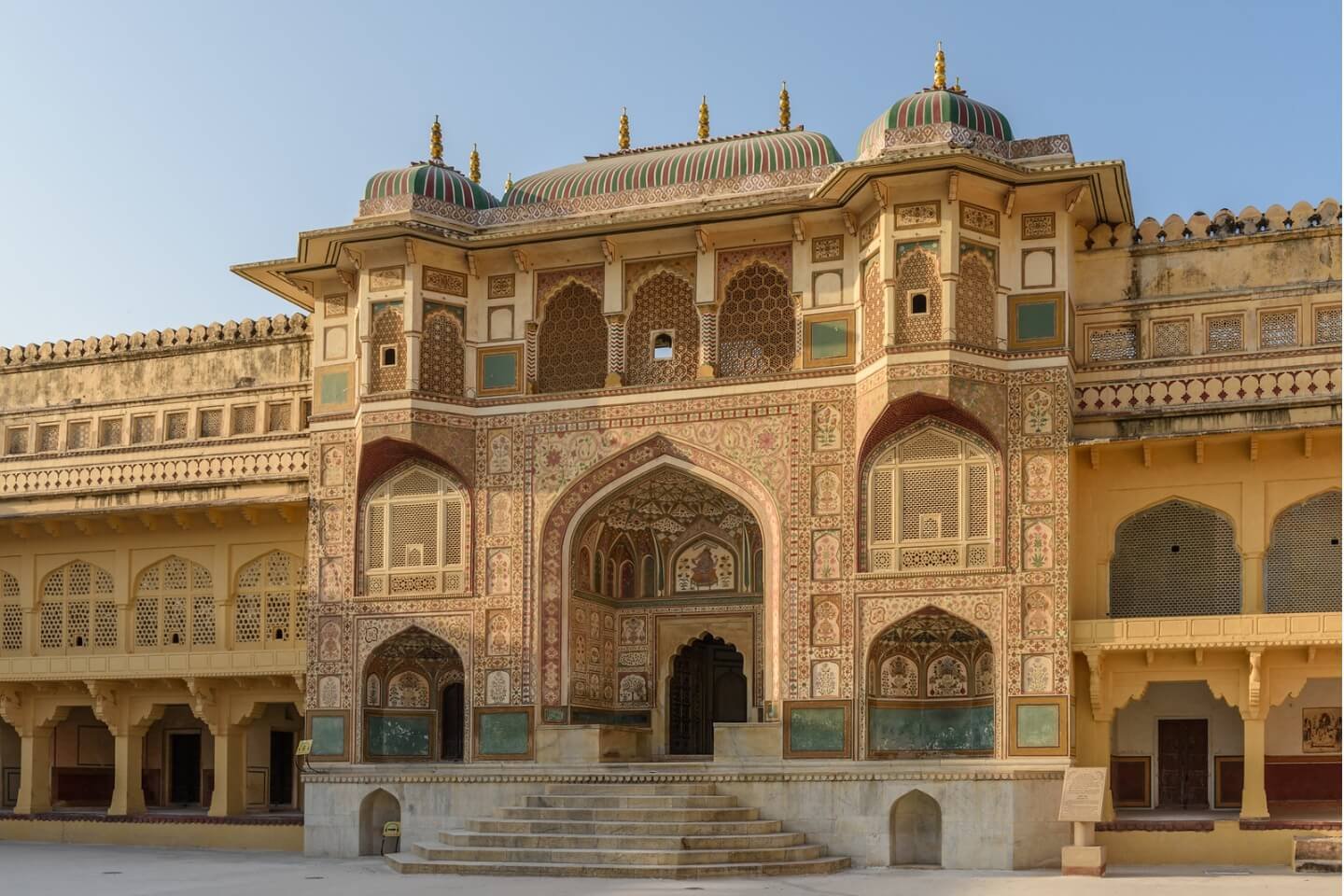
Located within the sprawling Amer Fort (Amber Fort), the Ganesh Pol is arguably the most beautiful gateway in all of Rajasthan. Built between 1611 and 1667 by Mirza Raja Jai Singh, it serves as the exclusive entry point to the Maharaja’s private palaces. Named after the Hindu deity Lord Ganesh—the remover of obstacles—his image is intricately painted above the central arch to bring good luck to those who pass through.
🕒 Visitor Information: Entry Fee & Timings (2026)
Since Ganesh Pol is a central feature of the Amer Fort complex, access is included in your standard fort entry ticket.
| Category | Day Entry (2026) | Night Entry (2026) |
| Indian Adults | ₹200 per person | ₹100 per person |
| Foreign Tourists | ₹1,000 per person | ₹100 per person |
| Students (with ID) | ₹50 (Indian) / ₹500 (Foreign) | ₹100 per person |
⏰ Opening Hours
Daytime: 8:00 AM – 5:30 PM (Daily)
Night Tourism: 6:30 PM – 9:00 PM (Limited areas illuminated)
Best Time to Visit: 8:30 AM to catch the morning sun hitting the frescoes.
🎨 Architecture & Artistry: A Fusion of Styles
Ganesh Pol is a masterclass in the Mughal-Rajput fusion style of architecture.
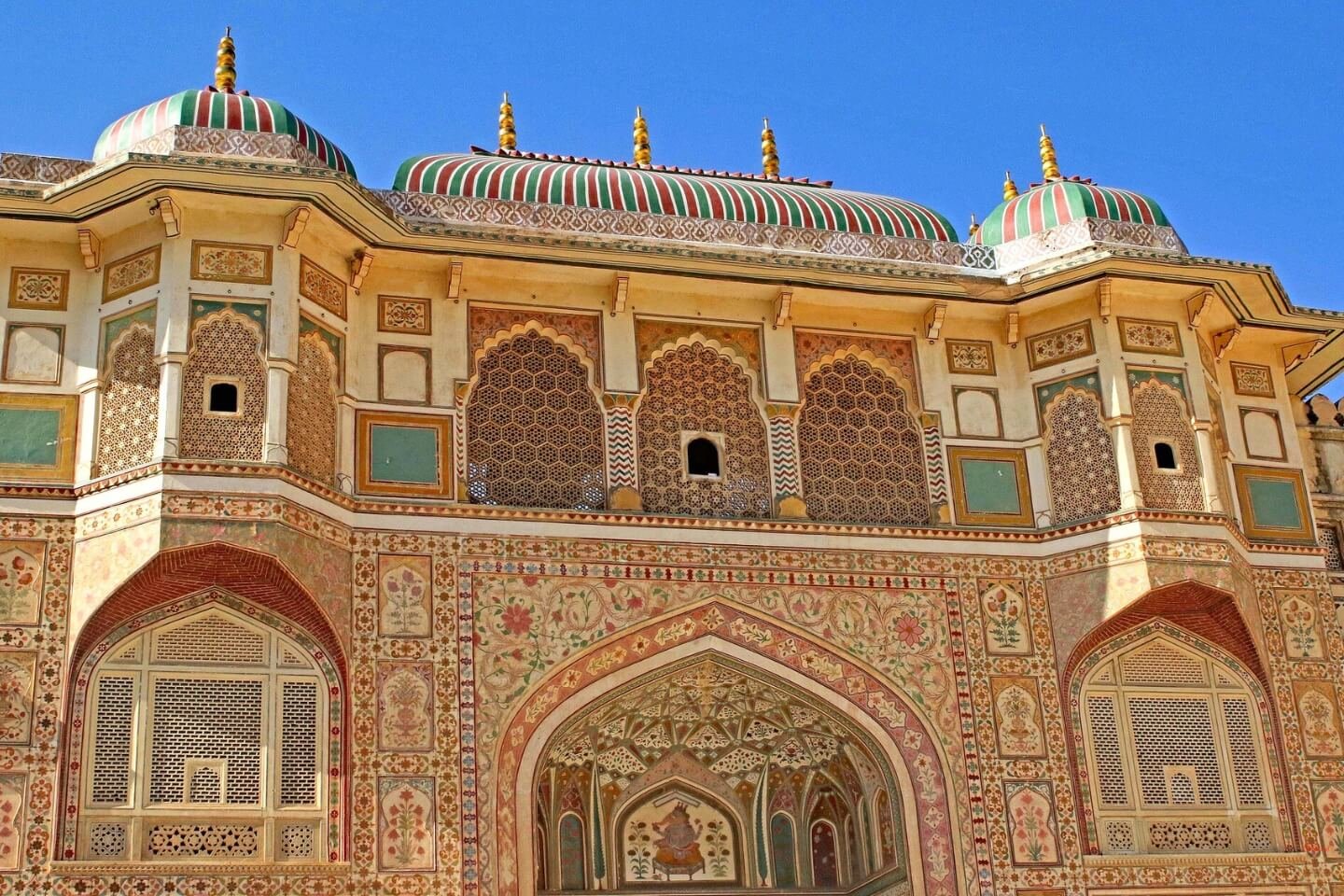
The Frescoes: The gate is covered in exquisite paintings made with natural vegetable dyes that have remained vibrant for over 350 years.
The Mosaic Work: Intricate glass and stone mosaics adorn the arches, leading into the Diwan-i-Khas (Hall of Private Audience).
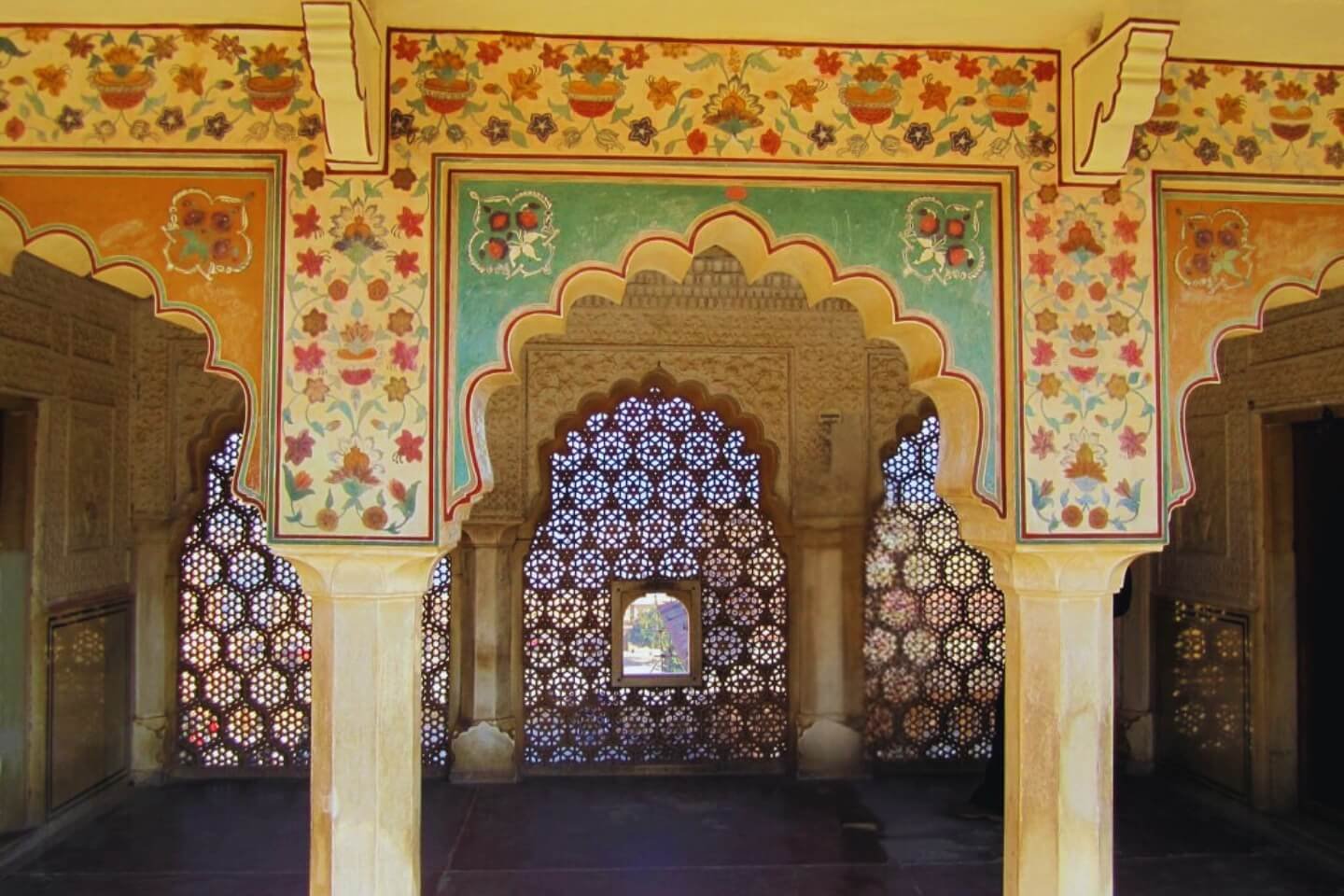
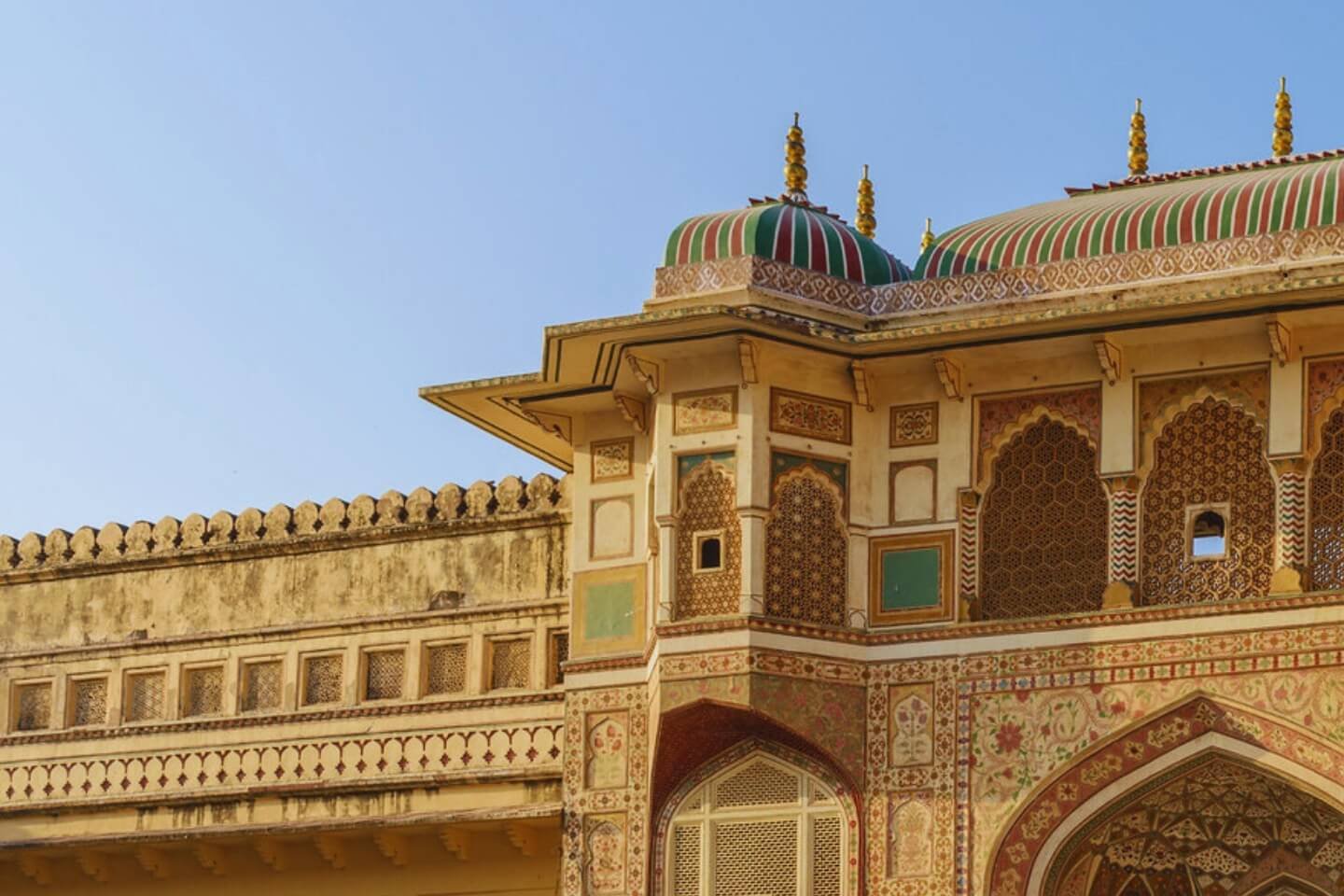
The Suhag Mandir: Directly above the gate is a small chamber with beautiful lattice (Jaali) screens. This was where the royal women (who observed purdah) would sit to watch state functions held in the courtyard below.
✨ Must-See Highlights Around Ganesh Pol
Passing through this gate opens up the most opulent sections of Amer Fort:
Sheesh Mahal (Mirror Palace): Just beyond the gate lies the world-famous hall of mirrors, where a single candle can illuminate the entire room.
Sukh Niwas (Hall of Pleasure): Located opposite the Sheesh Mahal, this room used an ancient “air conditioning” system involving water channels to keep the royals cool in summer.
Mughal Garden: A star-shaped garden located between the private halls, designed to mimic the paradise gardens of the Mughal emperors.
The Secret Window: Look for the tiny binoculars and windows on the upper level where the queens caught glimpses of the public festivities.
🎭 Evening Attractions: Light & Sound Show
After exploring the gate, stay for the Amer Fort Light and Sound Show at Maota Lake.
English Show: 6:30 PM (Winter) / 7:30 PM (Summer)
Hindi Show: 7:30 PM (Winter) / 8:30 PM (Summer)
Price: Approx. ₹300 per person (2026).
🚗 How to Reach Ganesh Pol
Location: Inside Amer Fort, approx. 11 km from Jaipur City.
Elephant Ride: 8:00 AM – 11:00 AM (₹1,100 per ride for two people).
Jeep Ride: Available from the Amer town base for approx. ₹500 (Round trip).
Walking: A scenic 15-minute uphill walk from the main parking lot.
💡 Expert Tips for 2026
Avoid Crowds: Ganesh Pol is a “selfie hotspot.” To get a clean photo of the gate, try to be among the first group to enter at 8:00 AM.
The Composite Ticket: If you plan to visit Jantar Mantar, Hawa Mahal, and Nahargarh, buy the Jaipur Composite Ticket (₹550 for Indians / ₹1,700 for Foreigners) to save money.
Guide Tip: Hire a certified guide at the entrance to explain the specific meanings of the different floral motifs painted on the gate—they all have hidden royal symbolism.


This Secret Tunnel Map reveals a path most tourists miss. Built in the 18th century as an emergency escape route for the royal family, this restored passage allows you to walk from the opulent Amer Palace directly to the military stronghold of Jaigarh Fort.
🕵️ The “Escape Route” Trail: Amer to Jaigarh Tunnel
Walking this 1.5 km tunnel is like stepping into a historical spy thriller. It was designed to evacuate the Maharaja undetected if Amer Fort ever fell to an enemy.
🗺️ The Tunnel Map & Key Checkpoints
The Hidden Entrance (Amer Side): Look for the “Way to Tunnel” sign near the Zenana Deorhi (Women’s Quarters) or Ganesh Pol. It is a small, unassuming door that leads underground.
The Subterranean Web: The first 325 meters are fully underground. You’ll pass through junctions where “tributary” tunnels once met—connecting the King’s quarters and the barracks to this main escape artery.
The Open Rampart Walk: The tunnel “surfaces” and turns into a high-walled walkway that snakes up the Cheel ka Teela (Hill of Eagles). This section offers stunning, slit-view perspectives of the Maota Lake below.
The Final Ascent: The path eventually merges with a cobblestone road. It’s a steep 15–20 minute hike that brings you to the Awani Gate of Jaigarh Fort.
⏱️ Logistics for 2026
| Feature | Details |
| Operational Hours | 9:00 AM – 4:30 PM |
| Additional Fee | ₹50 (Approx. on top of Jaigarh entry) |
| Total Distance | ~1.5 Kilometers |
| Time to Complete | 30 – 45 Minutes (Walking) |
| One-Way Rule | Generally, you can only go Amer → Jaigarh. There is no re-entry to Amer once you exit. |
💡 Insider “Tunnel” Secrets
The Light Hack: While the tunnel has basic lighting, it can be eerie and dim in sections. Keep your phone flashlight ready.
The Battery Cart Option: If you aren’t up for the steep hike, check at the Amer entrance for battery-operated golf carts. They occasionally operate through the motorable parts of the passage for a small fee.
Acoustics: Try whispering at certain bends in the underground section; the acoustics were designed so that guards could hear approaching footsteps from a distance.
The “Reward” at the End: Once you reach the top (Jaigarh), head straight to the Jaivana Cannon—the world’s largest wheeled cannon—as your prize for completing the climb.
⚠️ A Quick Warning
This is a physical hike. The final stretch to Jaigarh is steep and can be exhausting in the Jaipur sun.
Carry water (none is available inside the tunnel).
Wear sturdy shoes—the old stones can be slippery or uneven.
