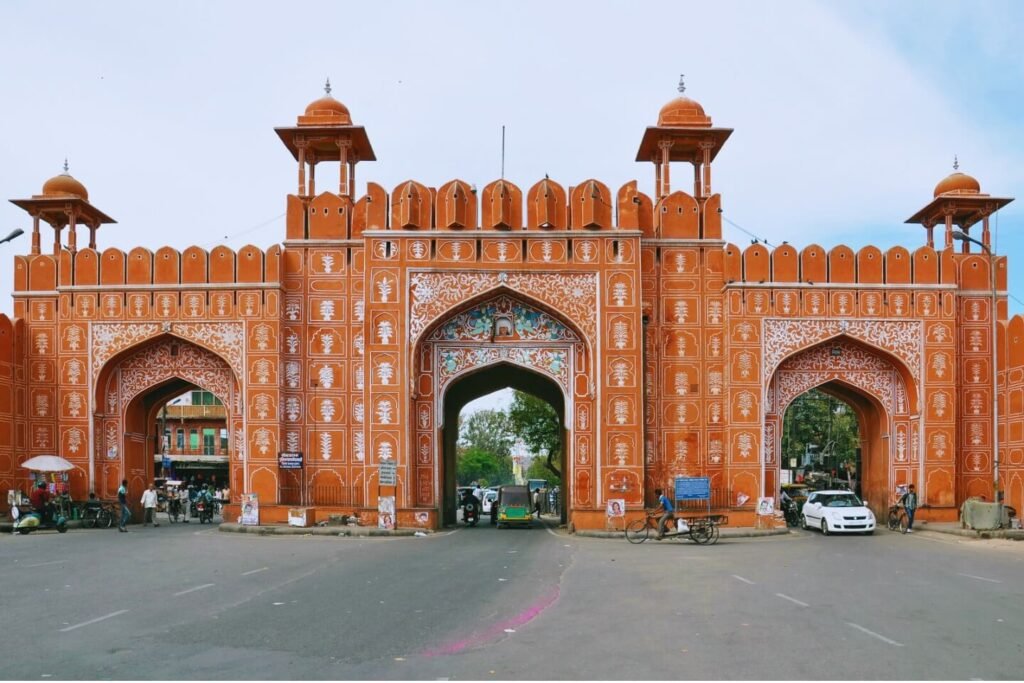
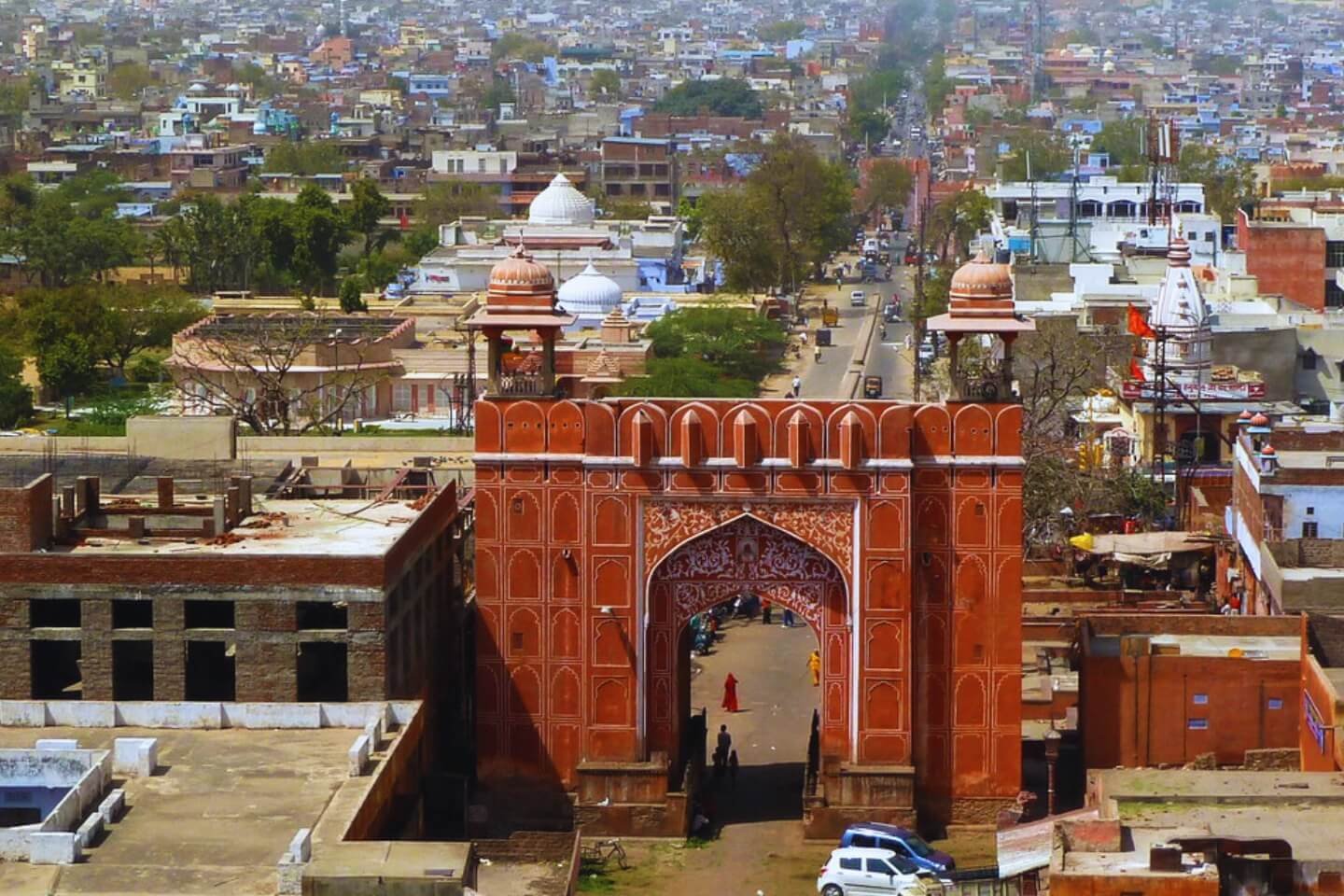
In the symmetrical grid of Jaipur’s walled city, Chandpole (The Moon Gate) stands as the majestic western entrance. While the city is famous for many gates, Chandpole is unique for being the gateway to a bustling, kilometer-long bazaar that has preserved the artisanal soul of Rajasthan for over 300 years. If you are looking for the finest marble sculptures in India, this is where your journey begins.
🕒 Visitor Information: Timings & Entry (2026)
Chandpole is a public heritage area and a functional marketplace. While the gate is always visible, the market has specific peak hours.
| Category | Details |
| Entry Fee | No Entry Fee |
| Gate Timings | Accessible 24/7 |
| Market Timings | 10:30 AM – 9:00 PM (Most shops) |
| Best Time to Visit | 11:00 AM (To watch sculptors at work) |
| Location | Western end of the Walled City, Jaipur |
🏛️ Architecture: The Moon Gate
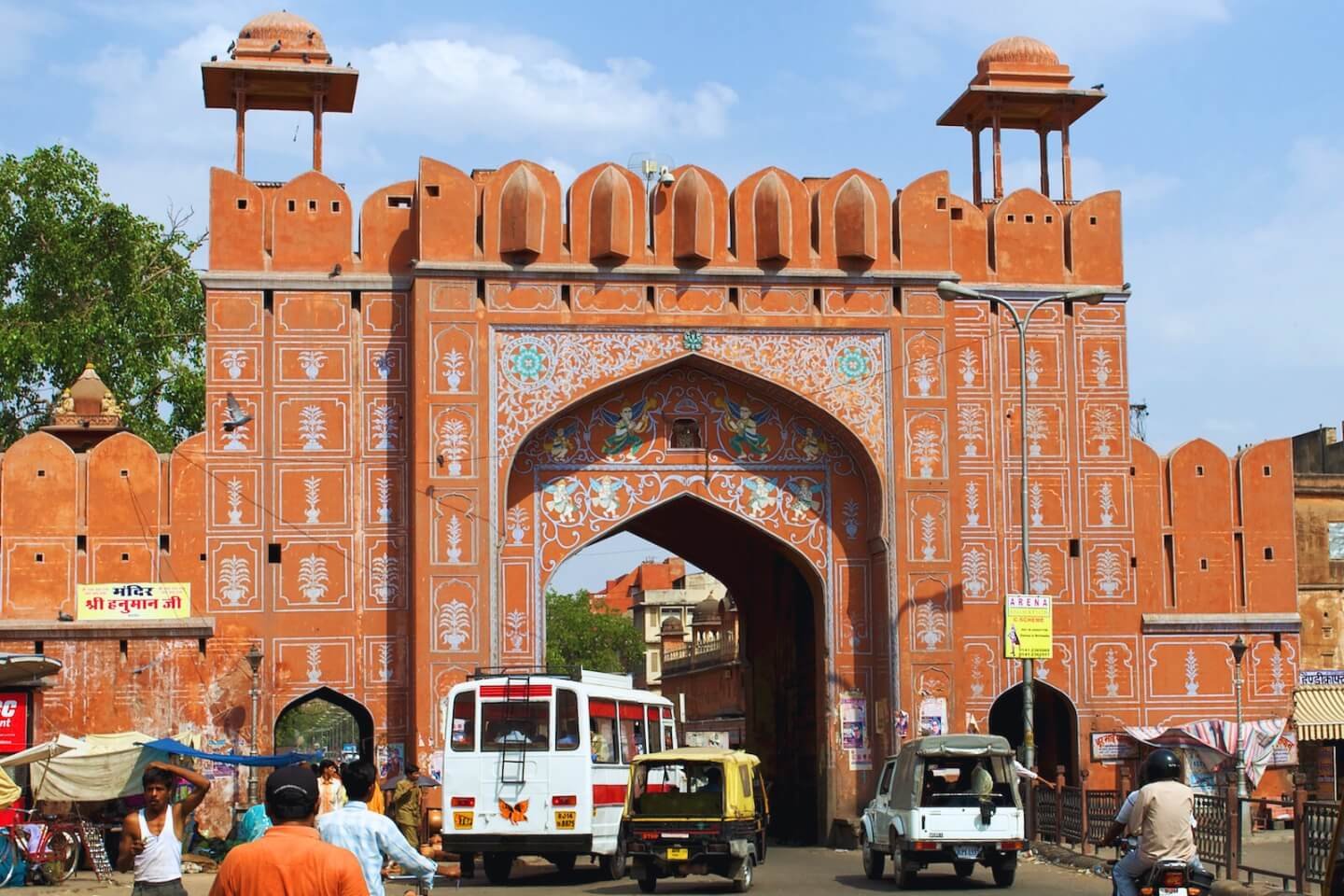
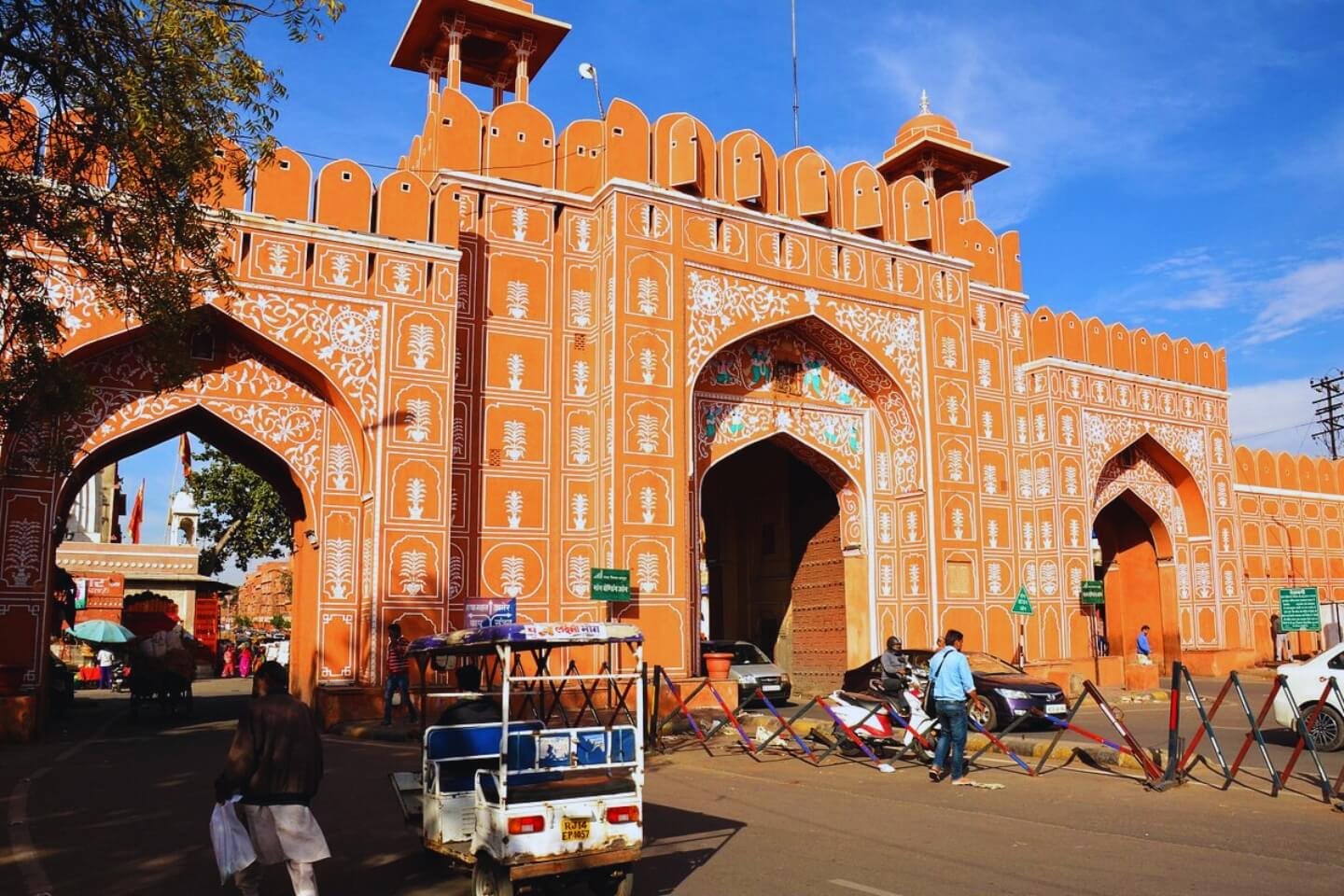
Built around 1727 AD alongside the city’s foundation, Chandpole is a stunning example of Rajput architecture with Mughal nuances.
Naubat Khana: The upper section of the gate once housed musicians and drummers who signaled the arrival of royalty or the changing of the guard.
Symmetry: The bazaar stretching from the gate to Choti Chaupad is perfectly aligned, featuring the iconic pink terracotta wash and uniform verandahs that offer shade to shoppers.
🛍️ What to Shop For: The Artisans of Chandpole
Chandpole Bazaar is segmented into specific lanes (Rastas) dedicated to particular crafts.
1. Marble Sculptures (Khazane Walon ka Rasta)
This is the “specialty” of Chandpole. Jaipur’s finest marble artisans reside here. You can witness sculptors chiseling blocks of white marble into lifelike deities, modern art pieces, and intricate home decor.
Tip: Visit Silwaton Ka Mohalla to see the raw process of idol-making.
2. Hand-Knit Carpets & Textiles
Jaipur’s carpet-weaving tradition dates back to the 17th century. In Chandpole, you can find high-quality hand-knotted rugs with vibrant vegetable-dye patterns that are exported worldwide.
3. Rajasthani Art & Paintings
Look for ‘Thani Bani’ style paintings from Kishangarh and miniature artworks depicting scenes from the Ramayana and Mahabharata.
4. Traditional Footwear & Woodcraft
The market is a treasure trove for embroidered Mojaris (leather shoes) and handcrafted wooden jewelry boxes or furniture.
🍛 Street Food & Iconic Eateries
Shopping in Chandpole is hungry work. Don’t miss these local favorites:
Shiv Shakti Pavitra Bhojnalaya: For authentic, budget-friendly Rajasthani meals.
Wind View Cafe: While located near Hawa Mahal, it’s a great spot to relax after a long walk through the markets.
Local Treats: Sample the Samosas and Jalebis from the small vendors near Choti Chaupad.
🚗 How to Reach Chandpole
By Metro (Recommended): The Chandpole Metro Station and Choti Chaupar Metro Station are located at either end of the market, making it the most accessible bazaar in the city.
By Train: Only 2 km from the Jaipur Railway Station.
By Rickshaw: Cycle-rickshaws are the best way to navigate the narrow lanes if you want to soak in the sights without walking the full kilometer.
💡 Expert Tips for 2026
Bargaining is Essential: Unlike the fixed-price showrooms of Johari Bazaar, bargaining is expected in Chandpole, especially for marble statues and handicrafts.
Shipping: If you buy a large marble statue, most reputable vendors in Khazane Walon ka Rasta provide international insured shipping services.
Photography: The pink corridors and the towering Moon Gate are perfect for street photography. For the best light, visit in the late afternoon when the sun hits the western facade of the gate.

This “Sculptor’s Studio Tour” takes you into the dusty, rhythmic lanes of Chandpole, where the sound of hammers hitting marble has echoed for centuries. This isn’t just a shopping trip; it’s an immersive look at a craft that transforms raw Makrana stone into divine idols.
🗿 The Chandpole Sculptor’s Studio Tour
The Route: Start at Khazane Walon ka Rasta and wind through Silwaton Ka Mohalla. Best Time: 11:00 AM – 3:00 PM (When the light is best and artisans are most active).
Stop 1: Pandey Moorti Bhandar (The Heritage House)
Legacy: Established in 1960, they are one of the most respected names in the district.
The Experience: They specialize in high-end, intricately carved deities. Walk into their showroom to see finished masterpieces, but ask politely to see the “back studio” where the rough sketching on marble slabs begins.
Find it: Narain Bhawan, 4th Crossing, Khejre Ka Rasta.
Stop 2: Khazane Walon ka Rasta (The “Road of Treasures”)
The Experience: This entire street is a living museum. As you walk, you’ll pass dozens of open-front workshops like Astha Marble Moorti Art and Dixit Marble Moorti Museum.
What to watch for: Look for the “Finishing” stage. You’ll see artisans using fine sandpaper and water to give the marble its glass-like shine.
Pro Tip: This is the best place to find “Thani Bani” paintings on marble plates.
Stop 3: Silwaton Ka Mohalla (The Raw Core)
The Experience: This is the neighborhood of the Silwats (traditional stone carvers). Unlike the polished showrooms, this area is gritty and authentic.
The Craft: Here, you can witness the “Zari” work—the process of painting the marble idols with real gold leaf and vibrant colors once the carving is done.
Artist to look for: Shiv Narayan Rajaram Artist (a multi-generational studio known for realistic features).
Stop 4: Anupam Moorti Museum (For Contemporary Classics)
The Experience: A great place to see how modern technology (like power tools) is blending with ancient hand-carving techniques.
Variety: From 12-inch home shrines to 12-foot garden statues, they showcase the sheer scale of Jaipur’s marble industry.
Find it: Near Krishna Bakery, Chandpole Bazar.
🎨 The “Carving Process” Cheat Sheet
Keep an eye out for these 4 stages as you walk the trail:
Rekhankan: The initial charcoal sketching on a block of white Makrana marble.
Khudan: The heavy-duty chiseling to remove bulk stone (the loudest part!).
Ghasai: The intense polishing using progressively finer stones and water.
Shringar: The final “eye-opening” ceremony where the features and jewelry are painted on.
💡 Visitor Etiquette for Workshops
The “Dust” Factor: Wear a mask if you are sensitive to stone dust; these are active industrial workshops.
Permission: Artisans are generally very proud to show their work, but always ask “Photo le sakte hain?” (Can I take a photo?) before clicking.
Barter Wisely: If you find a small “Bust” or “Idol” you love, remember that the price often includes the artist’s labor for weeks. Bargain, but respect the craft.
