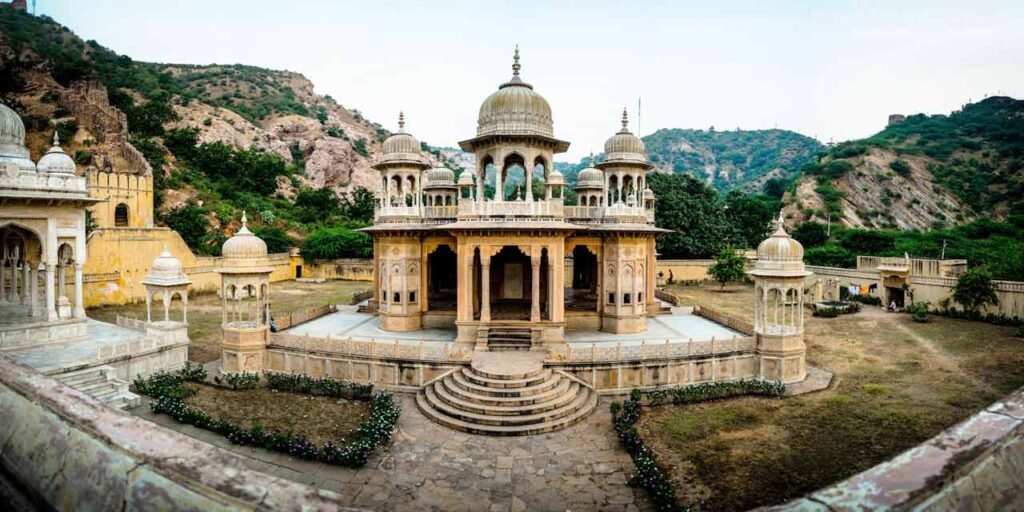
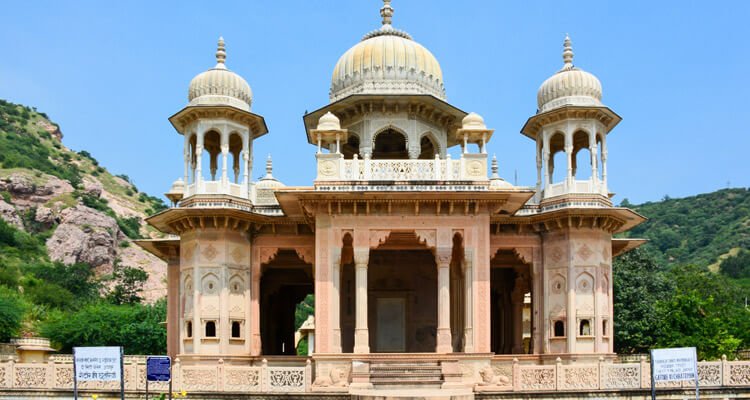
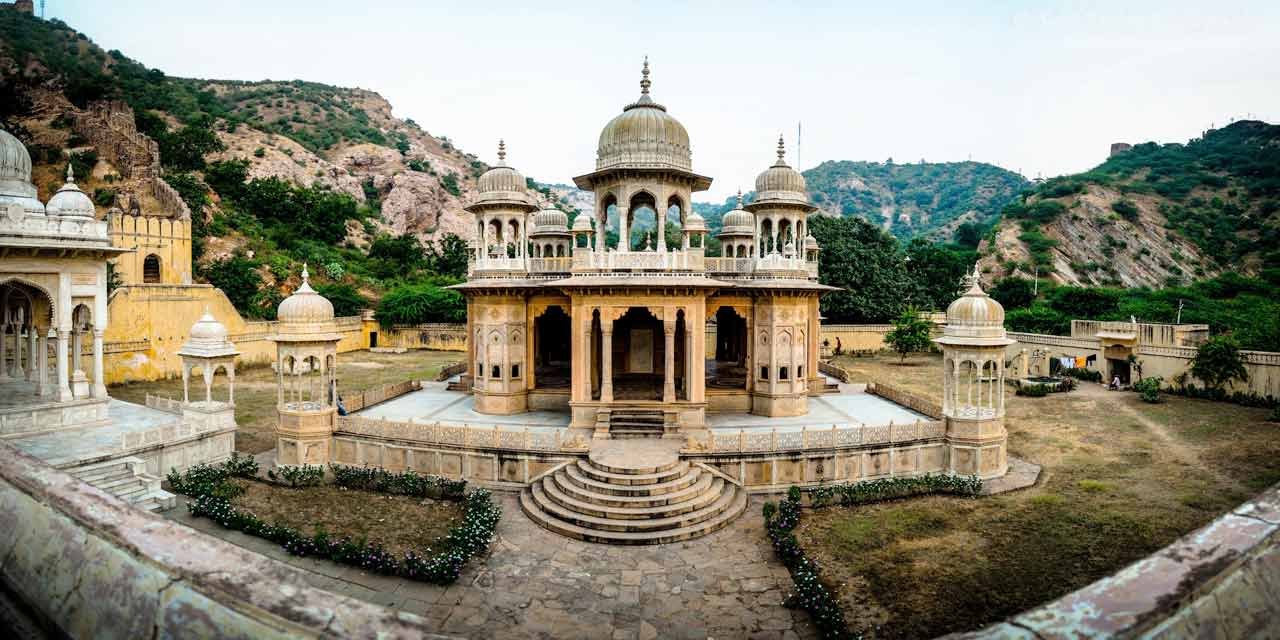
Nestled in a peaceful valley at the foothills of Nahargarh Fort, Gatore Ki Chhatriyan (also known as Royal Gaitor) is the final resting place of the Kachwaha Rajput kings. Derived from the Hindi phrase “Gaye ka Thor” (the resting place of departed souls), this site is an architectural masterpiece where the sorrow of death has been transformed into a majestic “Saga of the Past.”
🕒 Entry Fee & Timings (2026)
Gatore is a budget-friendly destination and is often less crowded than the main forts.
| Category | Details |
| Indian Adult | ₹30 |
| Foreign Adult | ₹50 – ₹100 |
| Indian Children (5-12 yrs) | ₹20 |
| Opening Hours | 9:30 AM – 5:00 PM (Daily) |
| Ticket Window Closes | 4:30 PM |
Composite Ticket Tip: Gatore is included in the Composite City Palace Ticket (approx. ₹300 for Indians), which also covers City Palace, Jaigarh Fort, and Maharani Ki Chhatriyan.
🏛️ Architectural Splendor: Where Marble Meets History
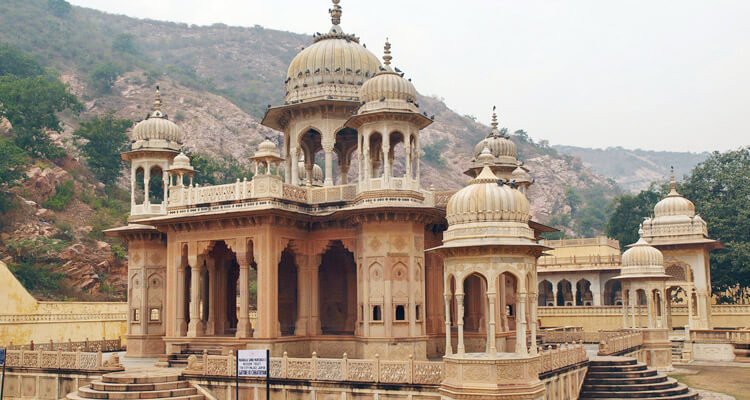
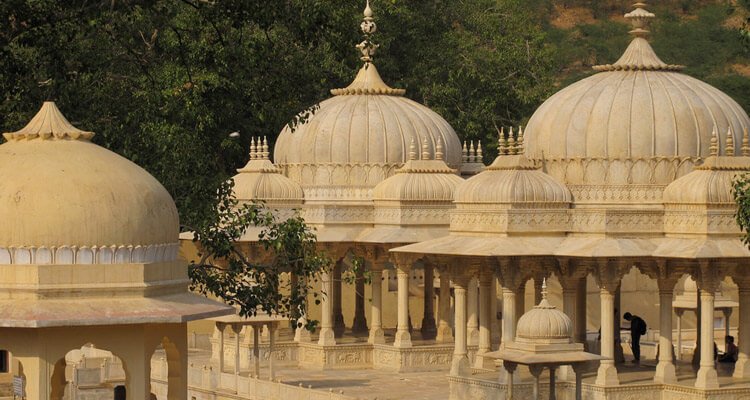
The complex is a stunning blend of Indo-Persian and Vedic architecture. Unlike typical somber cemeteries, these cenotaphs (chhatris) resemble shrunken open-air palaces, each topped with a signature umbrella-shaped dome.
1. The Cenotaph of Sawai Jai Singh II
The most iconic memorial belongs to the founder of Jaipur. Built with the highest quality white Makrana marble, it features 20 intricately carved pillars and a central dome adorned with figures of Hindu deities, musicians, and celestial maids.
2. The Ornate Chhatri of Sawai Madho Singh II
Considered the most intricate in the complex, this memorial features a unique blend of stone and marble work. Guarded by two stone lions at the entrance, its octagonal layout and delicate carvings often draw comparisons to the symmetry of the Taj Mahal.
3. Symbolic Carvings
As you wander, look closely at the bases of the pillars. You will see detailed reliefs of elephant processions, royal battle scenes, and traditional games, immortalizing the hobbies and victories of the kings who rest here.
📸 Top Things to Do
Photography: Known as one of Jaipur’s most Instagram-worthy spots, the play of light and shadow through the marble pillars is breathtaking, especially in the late afternoon.
Panoramic Views: From the elevated platforms, you can see the ramparts of Nahargarh Fort looming above and catch a glimpse of the Jal Mahal in the distance.
Peace & Meditation: Located away from the city noise, it is the perfect spot for travelers looking to escape the hustle and bustle of the Pink City.
📍 Location & How to Reach
Address: Krishna Nagar, Brahampuri, Jaipur, Rajasthan 302002.
By Cab/Auto: Just 15 minutes from the City Palace. You can easily take an auto-rickshaw from the main market areas.
Distance:
From Sindhi Camp Bus Stand: 5.8 km
From Jaipur Railway Station: 8 km
From Jaipur International Airport: 15 km
💡 Travel Tips for 2026
Best Time to Visit: The winter months (October to March) offer the best weather. Visit around 4:00 PM for soft, natural lighting that makes the white marble glow.
Respect the Site: Remember that this is a funerary site. Avoid climbing on the actual tombs and maintain a quiet, respectful presence.
Combine Your Trip: Since it’s at the base of the hill, visit Gatore right before or after exploring Nahargarh Fort or the nearby Garh Ganesh Temple.

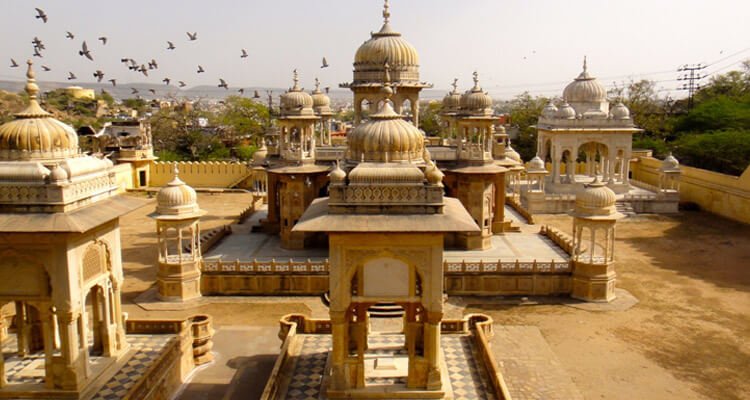

This “Sunset Heritage Route” is the most dramatic way to end a day in Jaipur. It transitions from the quiet, spiritual elegance of the Royal Cenotaphs at the mountain’s base to the high-energy, panoramic “glitter” of the city seen from the fort above.
🗺️ The Route: Gatore to Nahargarh (2026 Edition)
Stop 1: Gatore Ki Chhatriyan (3:30 PM – 4:45 PM)
The Vibe: Quiet and reverent. Capture your best photos of the white marble against the late afternoon sky.
Transition: As the ticket window at Gatore closes (5:00 PM), it’s time to head to the fort.
Stop 2: The Ascent (4:45 PM – 5:15 PM)
Option A (The Drive): Take a cab or auto-rickshaw around the winding hill road via Kanak Ghati. The drive is scenic, offering views of the Jal Mahal from above.
Option B (The Hike): For the adventurous, there is a steep, cobbled pedestrian ramp that starts near the Purani Basti area (close to Gatore). It takes about 20–30 minutes of brisk walking but offers the most rewarding “slow-motion” views of the city.
Stop 3: Sunset at Nahargarh Fort (5:15 PM – 6:30 PM)
The Spot: Head straight to the southern ramparts. This is the official “Sunset Point.”
The View: Watch as the sun dips behind the Aravalli hills, turning the “Pink City” into a sea of orange and eventually a glittering carpet of gold lights.
Stop 4: The “City Lights” Dinner (6:30 PM – 8:00 PM)
Padao Restaurant: This open-air RTDC lounge is perched right on the edge of the cliff.
Cost: There is a ₹100 entry fee (per person), which usually includes a complimentary tea, coffee, or soft drink.
The Vibe: It’s a casual spot to sip a drink while the city lights “sparkle” below you.
Once Upon a Time at Nahargarh: If you want a more formal, romantic sit-down meal with royal decor, this is the fine-dining alternative within the fort.
📋 Logistics & Costs (2026)
| Location | Entry Fee | Highlights |
| Gatore Ki Chhatriyan | ₹30 | Marble carvings, tranquility. |
| Nahargarh Fort | ₹100* | Sunset, stepwells, city panorama. |
| Padao Restaurant | ₹100 | Open-air lounge with the best night view. |
*Note: As of early 2026, the standard individual entry for Nahargarh Fort has been revised to ₹100 for Indians and ₹600 for foreigners.
💡 Tips for a Smooth Evening
Transport is Key: If you take a cab or auto up, pay them to wait. It is notoriously difficult and expensive to find an Uber or Ola back down from the fort after dark.
The “Composite” Hack: If you bought the ₹420 Composite Ticket earlier in the day (at Amer or Hawa Mahal), it covers your entry to both Gatore and Nahargarh—saving you the hassle of the ticket queue.
Safety: If you choose to walk down the pedestrian ramp after dinner, ensure you have a flashlight and are in a group. The path is safe but unlit in several stretches.
