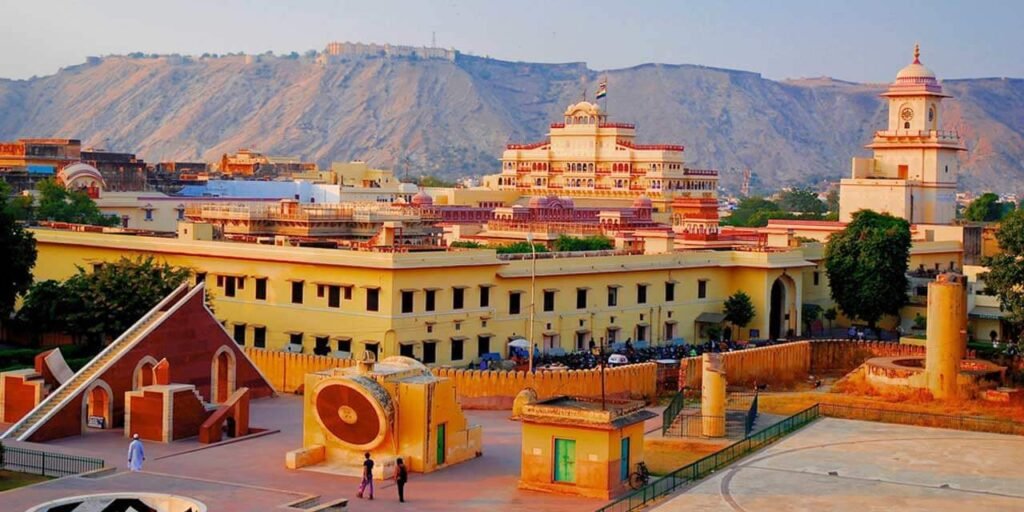
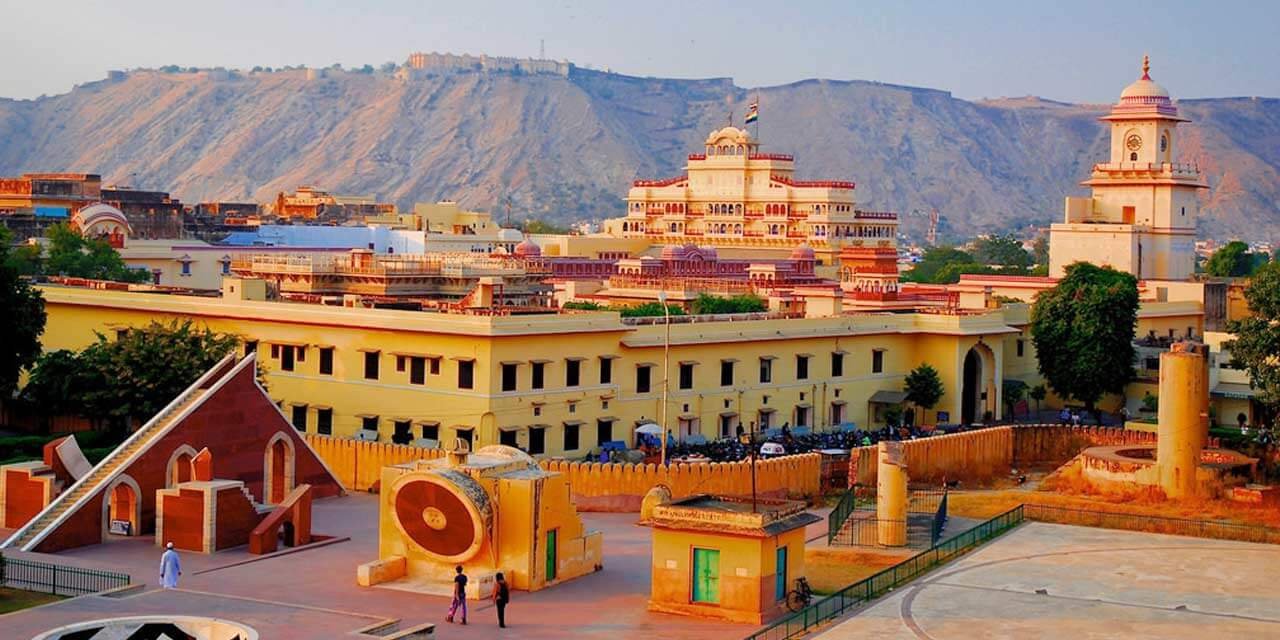
A UNESCO World Heritage Site, the Jantar Mantar in Jaipur is a stunning collection of 19 astronomical instruments built by the Rajput King Sawai Jai Singh II in 1734. The name translates from Sanskrit to “Calculating Instrument” (Jantra meaning instrument and Mantra meaning calculation). This open-air observatory is home to the Samrat Yantra, the world’s largest stone sundial, which can measure time with an accuracy of two seconds.
🕒 Entry Fee & Timings (2026)
Jantar Mantar is centrally located in the “Walled City,” making it a perfect daytime activity between visits to the City Palace and Hawa Mahal.
| Category | Entry Fee (Approx.) |
| Indian Adults | ₹50 |
| Indian Students (with ID) | ₹20 |
| Foreign Tourists | ₹200 |
| Foreign Students (with ID) | ₹100 |
Timings: 9:00 AM – 7:00 PM (Daily)
Light & Sound Show: Starts between 6:30 PM and 7:30 PM (seasonal).
Location: Gangori Bazaar, near City Palace, Jaipur, Rajasthan 302002.
Phone: +91 141 292 3486
🔭 The 5 “Must-See” Instruments
Out of the 19 architectural instruments, these five are the absolute highlights for any visitor:
Vrihat Samrat Yantra: Standing 27 meters tall, this is the largest sundial in the world. Its shadow moves at a speed of 1 mm per second, allowing you to watch time literally “pass by.”
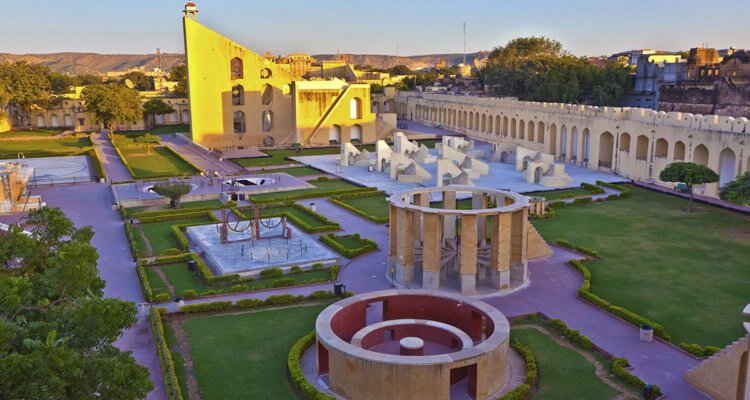
Jai Prakash Yantra: Consisting of two hemispherical bowls sunk into the ground, this instrument provides an inverted map of the sky and was used to track the movement of stars.
Ram Yantra: Two large cylindrical structures used to measure the altitude and azimuth of celestial bodies.
Misra Yantra: A compilation of five different instruments designed to determine the shortest and longest days of the year.
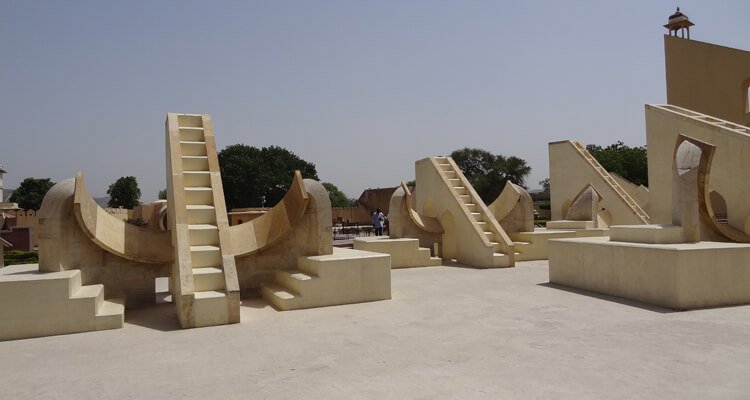
Rashi Valaya Yantra: A set of 12 instruments, each representing a different zodiac sign, used to track constellations based on your horoscope.
🎭 The Jantar Mantar Light and Sound Show
As the sun sets, the observatory transforms into a storytelling canvas. The show narrates the history of Jaipur’s construction and the scientific genius of Maharaja Sawai Jai Singh II.
October – February: 6:30 PM
March – April: 7:00 PM
May – September: 7:30 PM
Fee: Approx. ₹250 per person.
📍 Nearby Attractions (Within Walking Distance)
City Palace (400m): The royal residence of the Jaipur kings.
Hawa Mahal (700m): The iconic “Palace of Winds.”
Tripolia Bazar (300m): Famous for lacquer bangles and traditional textiles.
🚗 How to Reach & Best Time to Visit
Best Time: Visit at Midday (12:00 PM). While it is the hottest time of day, this is when the sun is directly overhead, and the readings on the sundials are the most accurate and easy to see.
Transport: Take a Cycle-Rickshaw for a classic Jaipur experience or use the Badi Chaupar Metro station (just a 5-minute walk away).
Guides: Certified guides are available at the entrance. Because the instruments are complex, a guide is highly recommended to understand how to “read” the stones.
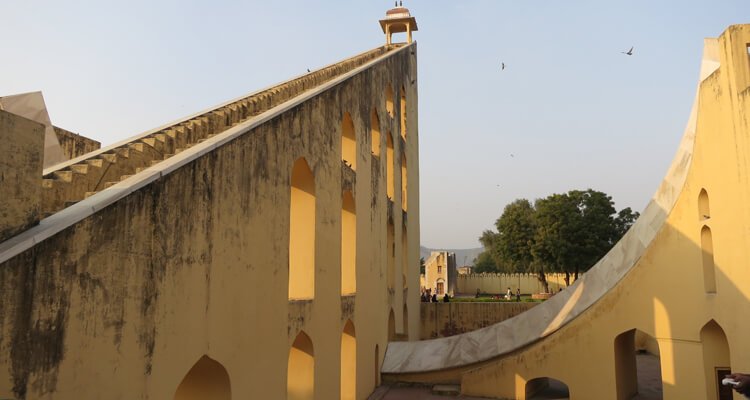
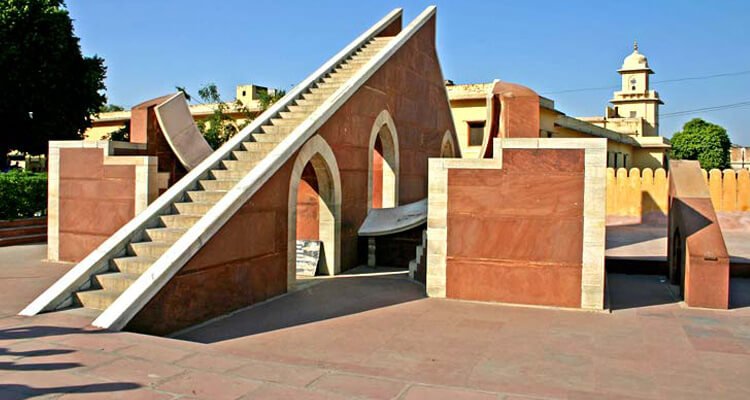
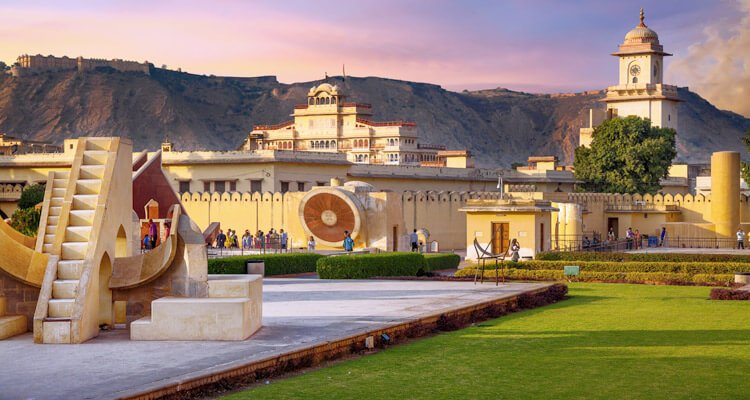
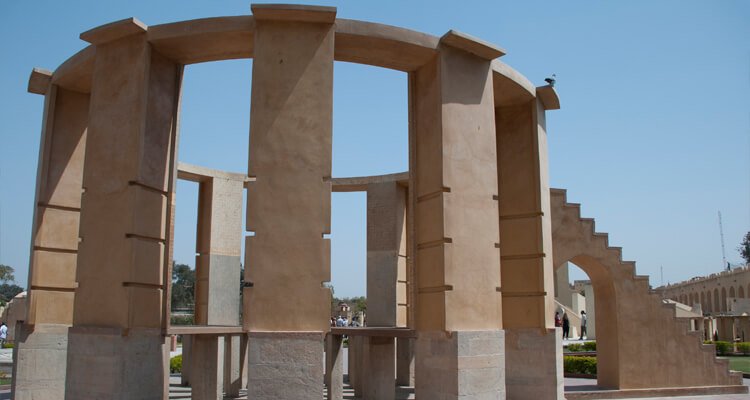
This “Science & Stars” Photography Itinerary is designed to help you capture the geometric precision of Jantar Mantar by day and its dramatic storytelling by night. Because Jantar Mantar is a complex of stark shadows and massive shapes, timing is everything.
📸 The Photographer’s Cheat Sheet: Best Angles
To get the most out of your camera, follow this sun-tracking guide:
| Time | Target Instrument | Why? |
| 11:30 AM – 1:00 PM | Vrihat Samrat Yantra | The “Midday” shot. With the sun directly overhead, the shadows on the sundial are crisp, showing off the 2-second accuracy. |
| Morning (9:30 AM) | Jai Prakash Yantra | Low-angle morning light creates deep, dramatic shadows inside the bowl-shaped sky maps, perfect for “leading line” compositions. |
| Late Afternoon | Rashi Valaya Yantra | The 12 zodiac instruments create a stunning repetitive pattern. Use a wide-angle lens to capture the “army of stones” look. |
| Blue Hour (Sunset) | Samrat Yantra Silhouette | Stand at the base of the small garden and shoot upward to get the 27-meter structure silhouetted against a purple and orange sky. |
🌌 Night Strategy: The Light and Sound Show (2026)
The light show isn’t just a history lesson; it’s a visual spectacle where lasers and colored spotlights trace the astronomical paths on the instruments.
Best Viewing Spot: The seating area is usually positioned near the Samrat Yantra. For the best photos, sit in the middle-back row. This allows you to capture the scale of the lights hitting the entire height of the sundial without having to tilt your camera too far up.
Show Highlights: The narrative focuses on Maharaja Sawai Jai Singh II’s quest for accuracy. The “star” of the show is when the lights mimic the movement of the planets across the stone surfaces.
Acoustics: The sound is crystal clear, but if you want to record a snippet, the left-hand side of the seating (closer to the speakers) is best.
🛠️ Camera Gear & Setting Tips
Lens Choice: Bring a Wide-Angle Lens (10mm – 24mm). The instruments are humongous and you often cannot step back far enough to fit them in a standard frame.
Tripod Rule: Tripods are generally not allowed inside the monument without a special permit. Use a beanbag or your camera bag on a stone ledge for long-exposure night shots.
Human Scale: To show how massive these “yantras” are, have a friend stand at the base of the Samrat Yantra. It creates a powerful sense of scale for your Instagram feed.
Polarizing Filter: Since the Jaipur sky can be very bright and the marble is white, a CPL filter will help deepen the blue of the sky and reduce glare on the stone.
📍 The “Golden Path” Route
Enter at 11:30 AM: Head straight to the Samrat Yantra for the midday reading.
12:15 PM: Explore the Rama Yantra and Jai Prakash Yantra (the “walk-in” instruments).
1:00 PM: Break for lunch at The Tattoo Café (right across from Hawa Mahal) for a top-down view of the city.
Return at 6:15 PM: For the Light and Sound Show.
